


Who Needs Office Walls? Clever Ways to Divide Space with Adaptable Furniture
As workplaces continue to evolve, rigid office walls are rapidly being replaced by smarter, more flexible solutions. Companies are prioritising collaboration, employee wellbeing, and agility, making dividing office space without permanent construction a key design focus.
Many offices struggle with noise, lack of privacy, hybrid meetings, frequent reconfigurations, or lease constraints, yet still need solutions that require no downtime or building work. These challenges make adaptable furniture and office dividers a perfect choice for modern work environments.
From suspended acoustic panels to mobile screens and modular furniture, these solutions support flexible office layouts while offering privacy, acoustic control, and visual structure. Many of these options are now considered the best office space dividers for companies that need quick ROI, minimal disruption, and spaces that can evolve with their teams.
1. Floating Privacy: Suspended Acoustic Panels
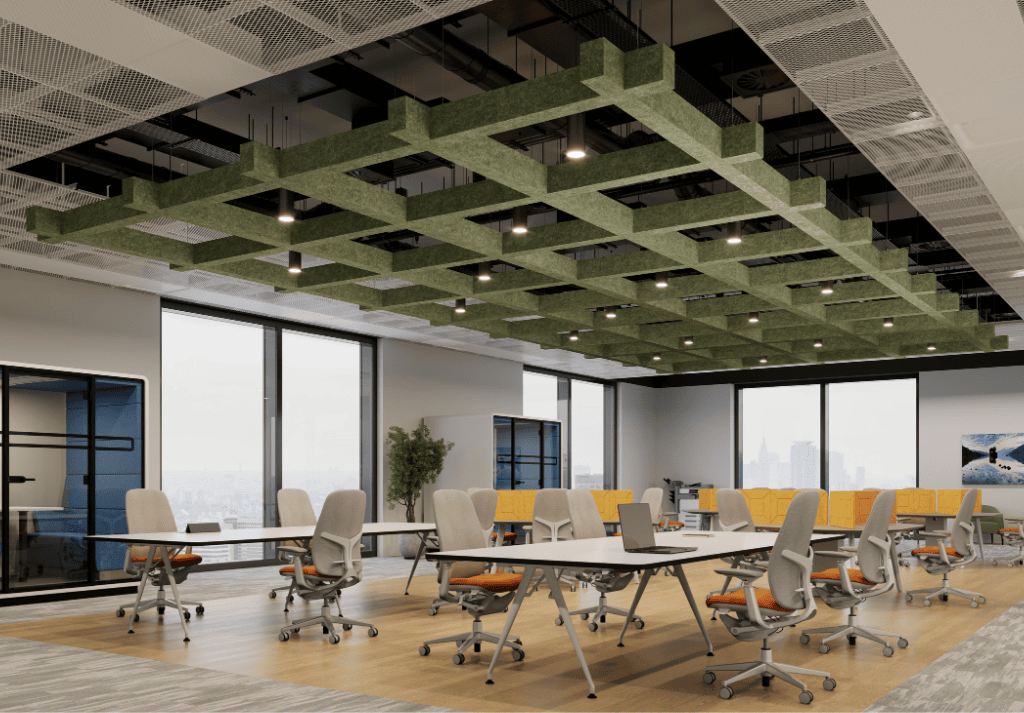
Suspended acoustic panels are one of the most effective ways to divide office space while preserving openness and natural light. Installed above workstations, collaboration zones, or call areas, these panels absorb sound and significantly reduce noise in open-plan environments without creating visual barriers. They’re particularly well suited to busy offices and coworking spaces where controlling ambient noise is essential, but maintaining clear sightlines, flexibility, and a light, open feel remains a priority.
Benefits of suspended acoustic panels:
- Noise Reduction: They significantly cut down ambient noise, allowing employees to concentrate better.
- Visual Separation: They create subtle divisions without blocking light or sightlines, maintaining an open, airy feel.
- Design Flexibility: Available in various designs, colours, and materials, they can complement your office aesthetics or act as bold statement pieces.
- Fast & Low-Disruption Installation: Quicker and far less disruptive than building fixed partitions, making them ideal for live office environments.
- Supports Zoning Without Reducing Natural Light: Helps define work zones while preserving daylight flow and the openness of the space.
Rather than solid walls, our suspended acoustic panels act as lightweight office space dividers, creating calmer work zones while enhancing the overall aesthetic of the office.
2. Mobile Office Screens: Flexible Office Layouts in Action
For organisations embracing flexible office layouts, mobile office screens are among the best office space dividers available. These freestanding screens can be repositioned instantly, allowing teams to adapt spaces for meetings, focus work, or collaboration as needs change.
Designed to support agile working, mobile screens evolve with the workplace, making them a core component of adaptable office furniture strategies.
Why mobile office screens work
Dynamic layouts: Screens can be easily repositioned to suit shifting team sizes, project work, or daily activity changes. This makes them ideal for open-plan offices where flexibility is essential.
Hybrid-work friendly: Mobile screens allow teams to quickly switch between collaborative environments and more secluded work zones, supporting both in-office collaboration and focused individual tasks.
Functional design: Many mobile screens integrate practical features such as whiteboards for brainstorming, pinboards for project planning, or integrated shelving and storage to keep work areas organised.
Designed to adapt to any space
Mobile office screens are available with a variety of base and foot options to suit different environments and usage needs:
Castors: Ideal for maximum mobility, allowing screens to be moved effortlessly and locked into place when needed.
Fixed feet: Provide a more stable, minimal look for semi-permanent zoning while remaining easy to reposition.
Adaptable bases: Some designs offer interchangeable feet or adjustable bases, giving offices the freedom to adapt screens over time.
With a wide range of heights and widths available, these office space dividers can suit everything from compact desk zones to larger open-plan areas requiring stronger acoustic separation. Narrow screens are perfect for tight spaces or desk-level zoning, while wider panels can define larger areas or form temporary rooms within open spaces.
With their modular sizing, varied base options, and multifunctional features, mobile office screens offer a smart, scalable solution for dividing space, without the permanence of traditional walls.
Explore our range of mobile office screens and discover versatile, high-quality solutions designed to adapt to any workspace. Find the perfect combination of functionality, mobility, and style to enhance productivity and support your flexible office layout.
3. Planters: Natural Office Space Dividers
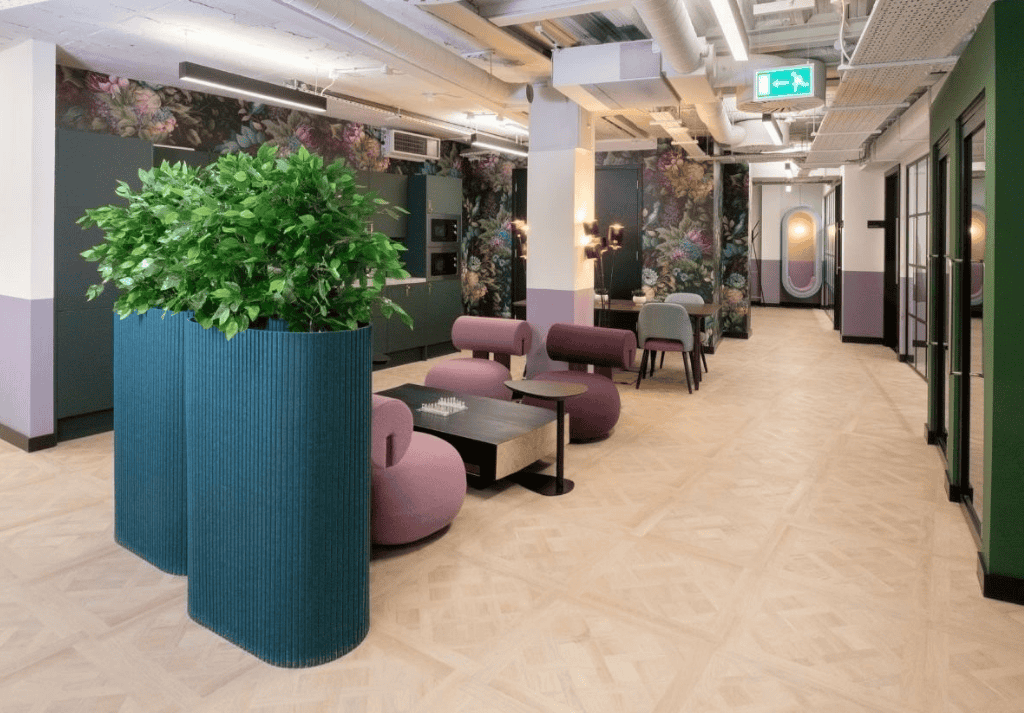
Biophilic design plays a vital role in modern offices, and planters are an increasingly popular solution for dividing office space naturally. Tall planters and modular planter walls introduce greenery while subtly defining zones in open-plan layouts.
Biophilic design is more than just a trend, it’s a strategy that improves air quality, reduces stress, and enhances well-being in the workplace. Beyond their aesthetic appeal, plants can also serve as natural dividers, helping to define zones in open-plan offices without relying on walls.
Tall planters and modular planter walls are especially effective at creating living partitions. These elements are easy to move and reconfigure, making them ideal for dynamic office environments where team needs and layouts frequently change. The greenery softens the look of sleek furniture, introduces natural textures, and subtly guides circulation through the office.
For offices that need extra acoustic performance, acoustic planters are a powerful solution. These planters combine greenery with sound-absorbing materials, such as recycled PET felt panels embedded within the planter walls. They help reduce ambient noise while maintaining a light, open feel, effectively merging form and function.
Another creative option is stackable or layered planters. Planters can be placed on top of shelving, creating vertical gardens that act as taller, modular partitions. These stacked configurations not only enhance privacy but also maximize green coverage without consuming excessive floor space. Some designs even allow the top planter to hold small trees or larger foliage, adding height and visual interest to the office.
Benefits of using planters as dividers
- Biophilic appeal that boosts mood and productivityIncorporating greenery into the office brings a natural element that reduces stress, enhances wellbeing, and improves focus. Employees feel more relaxed and energized, which can translate into higher productivity and creativity throughout the day.
- Sound absorption when using acoustic plantersAcoustic planters combine greenery with sound-absorbing materials, helping to dampen ambient noise. This is particularly useful in open-plan offices or collaborative areas, where managing sound is key to maintaining concentration and privacy.
- Flexible, modular configurations for easy reorganizationPlanters can be moved, combined, or resized to suit changing office needs. Whether you need to create temporary meeting zones, adapt for hybrid work setups, or reconfigure layouts quickly, modular planters provide a low-cost, low-disruption solution.
- Vertical layering for space efficiency and dramatic visual impactStacking or arranging plants vertically allows you to define zones without taking up valuable floor space. Vertical planters also create a striking visual feature that draws the eye, adding texture, depth, and a sense of natural enclosure to the workspace.
By incorporating BT Offices’ range of Biophilic office planters, you can create versatile zones that are functional, sustainable, and visually engaging. They are the perfect complement to other adaptable office elements like mobile screens, high-back booths, and suspended acoustic panels.
4. High Storage Solutions as Office Space Dividers
Storage is not just for keeping things tidy, it’s a smart way of dividing office space while enhancing functionality and visual appeal. Tall cabinets, shelving units, and storage walls act as practical partitions, helping to define zones for work, collaboration, or circulation without the need for permanent walls.
Benefits of using storage as dividers
- Open storage: Maintains light and sightlines, keeping spaces visually connected while subtly defining zones.
- Closed storage: Provides privacy, hides clutter, and separates areas more distinctly, ideal for confidential work or dedicated team spaces.
Storage types to suit every office layout
- Tambours and cupboards: Offer secure, full-height storage while doubling as functional partitions.
- Credenzas and sideboards: Perfect for dividing desk clusters or open collaborative areas without obstructing sightlines.
- Lockers: Provide personal storage while helping to structure shared spaces in hybrid or hot-desking environments.
- Shelving units: Modular, freestanding shelves can create partial barriers that guide flow and subtly divide zones.
These storage solutions are available in a variety of sizes, heights, and finishes, from sleek laminates to premium wood veneers, allowing them to complement any office aesthetic while providing maximum adaptability.
By integrating storage as part of your adaptable office furniture, you can break up open-plan areas, organise clutter, and clearly define work zones, all in one solution.
Explore our full range of storage solutions and discover the perfect balance of organisation and style for your workplace. BT Office can tailor storage to match your finishes and plan it seamlessly into your layout, maximising space, keeping teams productive, and ensuring your office looks as good as it works.
5. Dividing Office Space with Different Height Furniture
Using furniture at varying heights is one of the most effective ways to divide office space without resorting to walls. By layering elements of different heights, offices can clearly define areas for focus, collaboration, and circulation, all while maintaining openness and natural light.
This approach works because sightlines naturally guide movement and activity. Lower furniture keeps areas visually connected, while taller pieces create subtle boundaries that signal privacy or dedicated zones.
Examples of layered furniture for zoning
- Enclosed pods: These provide acoustic and visual privacy for individual work or one-to-one meetings. Their height blocks distractions while subtly signalling a focus or quiet zone.
- High collaborative tables: Elevated tables define team areas for brainstorming, stand-up discussions, or informal collaboration. They encourage engagement while differentiating the space from quieter zones.
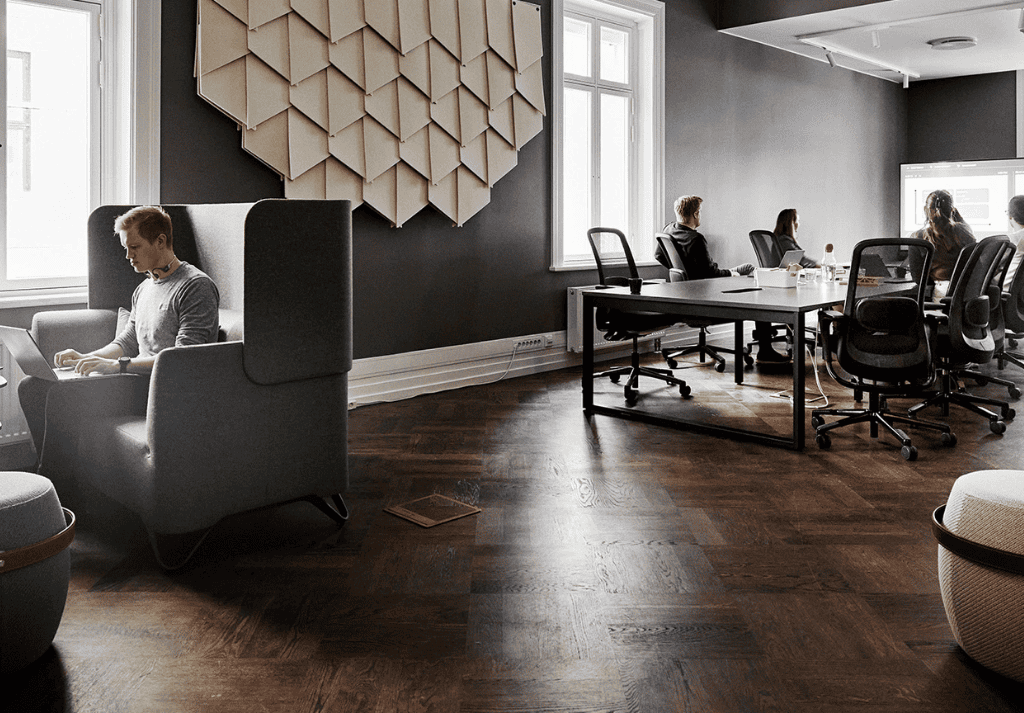
- Banquette and high-back soft seating: Arranging low banquette seating alongside high-back soft seating or panels creates natural transitional zones, such as casual meeting areas adjacent to workstations, while maintaining an open, connected office environment.
- Height-adjustable desks: These desks support individual comfort and productivity while contributing to zoning. When raised, they help define standing or collaborative areas; when lowered, they integrate seamlessly into seated work zones, maintaining flexibility and flow throughout the office.
How it defines space
By strategically arranging furniture at different heights, workplaces can break the floorplate into clear zones:
- Eye-level or taller furniture provides visual and acoustic separation without walls.
For example, tall shelving units behind workstations can shield focus areas from high-traffic paths, reduce noise, and create quiet zones—without closing off the office. - Varying heights communicate the function of each area.
Low benches and coffee tables signal casual collaboration spaces, while higher desks or partitioned pods indicate areas for focused, individual work. - Layering maintains sightlines while offering privacy.
Medium-height planters or low screens between desks let employees see across the office, preserving an open, airy feel, while still defining dedicated zones for concentration or small meetings.
By thoughtfully combining fixed and adjustable-height furniture, workplaces can create functional, visually distinct zones that support collaboration, focus, and employee wellbeing, all without permanent partitions. This layered approach is a hallmark of effective flexible office layouts and demonstrates the power of adaptable office furniture in modern office design.
6. Enclosed Free-Standing Pods
Free-standing pods, booths, and modular rooms provide privacy exactly where it’s needed most, without the disruption or permanence of traditional construction. As independent office space dividers, they are ideal for phone booths, quiet work, focused tasks, and confidential meetings, all while supporting flexible office layouts.
Designed for flexibility and aesthetics
Enclosed pods and workbooths are available in multiple sizes, layouts, and configurations, allowing them to integrate seamlessly into any workplace. A wide range of fabric finishes, and colour options ensures they complement existing interiors or reinforce brand identity.
Rather than closing spaces off, these enclosed solutions help break up large open areas visually and acoustically, creating rhythm, structure, and balance within the office.
Because they are modular and movable, enclosed pods align perfectly with adaptable office furniture strategies. They can be repositioned, reconfigured, or expanded over time, making them one of the best office space dividers for organisations planning for future growth and change. With BT Office, pods are professionally installed with full project support, ensuring minimal disruption to your workplace and a smooth, hassle-free setup.

Creating Flexible Office Layouts That Work with BT Office
The most successful office designs combine multiple strategies, suspended acoustic panels, mobile screens, planters and storage, and furniture at varying heights, to define zones, manage noise, and guide flow. Together, these solutions form some of the best office space dividers, creating adaptable, efficient, and visually appealing workplaces.
With expert knowledge and a deep understanding of modern workplace trends, our team can help you design flexible office layouts that balance collaboration, focus, and wellbeing.
Contact BT Office today to explore our space planning services and transform your office into a dynamic, future-ready environment.
FAQs for Dividing Space Without Walls
- What are the best office space dividers for open-plan offices with high noise levels?
For open-plan offices with high noise, suspended acoustic panels, acoustic wall panels, desk mounted screens, enclosed pods, and acoustic planters are highly effective. These solutions absorb sound, reduce distractions, and provide visual separation, all without building permanent walls.
- How can I divide office space without building permanent walls or disrupting the team?
Modular and movable furniture, mobile screens, and pods allow you to define zones quickly and with minimal disruption. BT Office handles professional installation and project support, so your team can continue working while the space is updated—no downtime or construction mess.
- Which office space dividers work best for hybrid working (calls, video meetings, and focus time)?
For hybrid work, enclosed pods, acoustic panels, and storage-screen combos are ideal. They provide quiet areas for calls or video meetings, while maintaining an open feel in collaborative spaces.
- How do I choose between mobile office screens, acoustic panels, planters, storage units, and pods?
The choice depends on your priorities:
- Acoustic panels for noise reduction.
- Pods for private calls and meetings.
- Mobile screens or planters for visual separation and flexibility.
- Storage units to define zones while adding functionality.
BT Office works with you to assess your space, team needs, and workflow to recommend the perfect mix of dividers.
- Can BT Office help me plan the layout and recommend the right divider solution for my space?
Absolutely. BT Office offers full space planning support, specifying dividers to suit your finishes, workflow, and office layout. From initial consultation to professional installation, they ensure your office is functional, flexible, and stylish, maximising productivity and minimising disruption.