


Choosing the Right Furniture for Different School Year Groups
Choosing classroom furniture is about more than finding desks and chairs that fit within the available space. Children and young people have different physical, educational and practical needs as they progress through school, so furniture should evolve alongside them. The right furniture can support comfortable working positions, encourage collaboration and help teachers create spaces that are easy to adapt throughout the school day. Factors such as pupil age, furniture size, durability, safety, storage and the way each classroom is used should all be considered when planning an effective learning environment.
From early years classroom furniture designed around younger children to flexible desks and seating for secondary school students, choosing the right furniture can help create comfortable, practical and engaging learning environments. Younger pupils may benefit from appropriately sized tables, chairs and accessible storage, while older students may require larger work surfaces, ergonomic seating and furniture that supports independent study, group work and technology. By selecting furniture according to the needs of each year group, schools can create classrooms that are functional, welcoming and designed to support pupils as they learn and grow.
Key Takeaways
- UK classroom furniture sizing follows BS EN 1729-1, which defines size marks 1–7 by pupil height, not year group.
- Early years (ages 3–6): size marks 1–2 — 260–310 mm seat height, 460–530 mm table height, rounded edges and wipe-clean surfaces.
- Key Stage
- 1–2 (ages 6–11): size marks 3–4 — 350–380 mm seat height, 590–640 mm table height, with flexible tables for group work.
- Secondary (ages 11+): size marks 5–6 — 430–460 mm seat height, 710–760 mm table height, plus space for laptops and devices.
- BS EN 1729-2 covers safety and strength testing — stability, no trap points, no sharp edges. Ask suppliers to confirm compliance with both parts.
- Stackable and mobile furniture lets one room serve lessons, exams and assemblies without buying separate sets.
Table of Contents
Why Classroom Furniture Needs to Change as Children Move Through School
What to Look for in Early Years Classroom Furniture
How to Choose Furniture for Key Stage One and Key Stage Two Classrooms
What Makes Furniture Right for Secondary School Students
How to Keep Classroom Furniture Flexible and Stackable Across Year Groups
Which Materials and Finishes Last Longest in a Busy School Setting
How BT Office Can Help You Furnish Classrooms for Every Year Group
Why Classroom Furniture Needs to Change as Children Move Through School
Children grow considerably between starting school and finishing secondary education. Their height, posture, independence and learning requirements all change, meaning furniture suitable for an early years classroom may not be appropriate for an older student.
The right classroom furniture should therefore reflect the age group using it. Younger pupils need furniture that is accessible, safe and appropriately sized, while older children require furniture that supports independent learning, technology and collaboration.
| School stage | Key furniture priorities | BS EN 1729 size mark |
| Early Years | Safety, accessibility, smaller proportions and easy-clean surfaces | 1 – 2 (260 – 310mm seat) |
| Key Stage 1 | Comfort, durability, flexibility and age-appropriate sizing | 2 – 3 (310 -350mm) |
| Key Stage 2 | Growing children, adaptable layouts and increased independent learning | 3 – 4 (350 – 380mm) |
| Secondary | Ergonomics, technology, collaboration and independent study | 5 – 6 (430 – 460mm) |
Schools should also consider how furniture will be used throughout the school day. Mobile, lightweight and stackable options can make it easier for teachers to adapt classrooms for different lessons, activities and teaching styles.
What to Look for in Early Years Classroom Furniture
Choosing the right early years classroom furniture is essential for creating a safe, comfortable and engaging learning environment. Young children are active throughout the school day, moving between individual activities, group work, creative play and practical learning, so their furniture needs to support a variety of activities.
When choosing classroom furniture for early years settings, schools should consider the size and proportions of the children, as well as how easily furniture can be moved, cleaned and adapted throughout the day. Tables and chairs should be appropriately sized, stable and easy for children to use independently, while rounded edges and durable, easy-clean surfaces can help create a safer and more practical classroom.
Storage is another important consideration. Low-level shelving and accessible storage can allow children to reach resources independently while helping teachers keep the classroom organised. Flexible furniture can also make it easier to adapt the room for different activities, from creative play and group learning to quieter individual tasks.
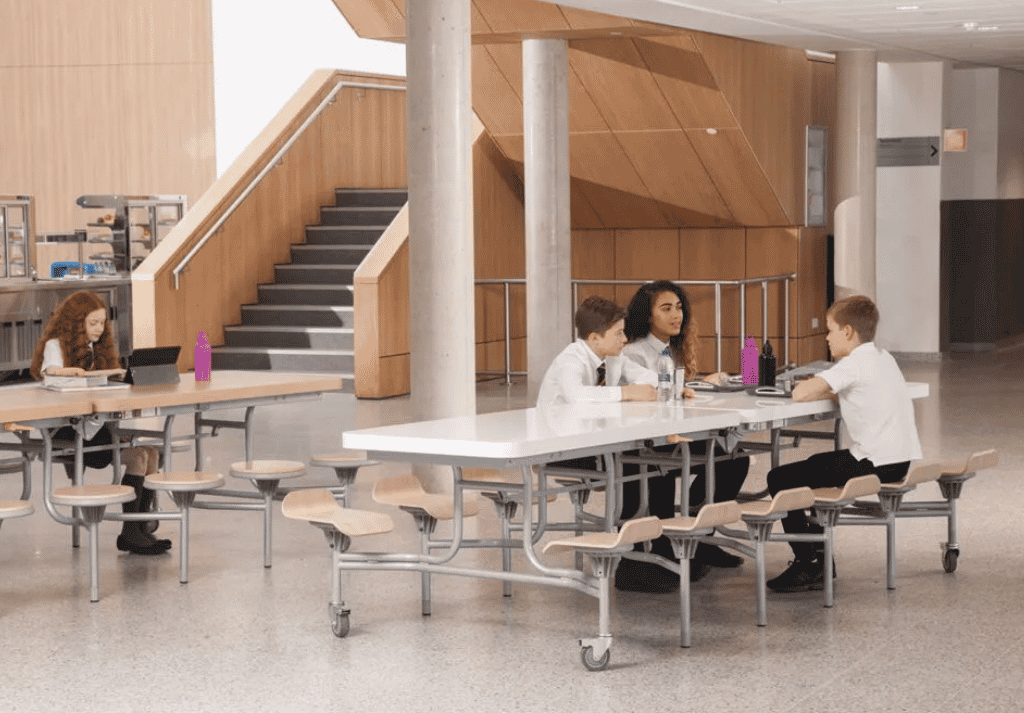
Which Table and Chair Heights Suit Early Years Children
Getting the proportions right is particularly important when selecting early years classroom furniture. Tables and chairs should be suitable for the height and age of the children using them, allowing pupils to sit comfortably and work without having to stretch or adopt an uncomfortable posture.
When considering classroom furniture for early years settings, schools should look at more than just the appearance of a product. Chair height, table height, stability and ease of use should all be considered to ensure furniture is appropriate for younger pupils.
When selecting furniture, consider:
- Chairs: The seat should allow children to sit comfortably with their feet supported.
- Tables: The height should allow pupils to work comfortably without stretching or hunching.
- Activity tables: Lower, accessible designs can support creative and practical activities.
- Storage: Low-level storage allows children to access resources independently.
Where a classroom includes children of different sizes, graduated furniture sizes can help provide a more comfortable and inclusive learning environment.
Why Safety and Rounded Edges Matter Most in the Early Years
Safety is one of the most important considerations when selecting early years classroom furniture. Young children are naturally active and may move quickly around the classroom, making stable furniture and carefully considered designs particularly important.
When choosing classroom furniture for early years settings, look for products with rounded corners and edges, sturdy frames and stable bases. These features can help reduce potential risks while allowing children to move around and interact with their surroundings more confidently.
Easy-clean and durable surfaces are also valuable in early years settings, where furniture may be exposed to paint, food, water and other everyday classroom activities. Choosing furniture specifically designed for educational environments can help schools create spaces that are both practical and welcoming.
How to Choose Furniture for Key Stage One and Key Stage Two Classrooms
As children progress beyond the early years, their furniture requirements change. However, many of the principles established when choosing early years classroom furniture remain relevant, particularly when it comes to durability, comfort and flexibility.
Primary classrooms often need to accommodate a combination of individual work, group activities, reading, creative projects and teacher-led lessons. This means flexible classroom furniture can be particularly valuable, allowing teachers to quickly change the layout depending on the lesson.
For classrooms that regularly change between individual and collaborative activities, work tables can provide a versatile solution, helping schools create layouts that can be adapted to different teaching requirements.
| Classroom Activity | Suitable Furniture |
| Individual learning | Individual desks and comfortable classroom chairs |
| Group work | Modular or easily reconfigured tables |
| Creative activities | Durable, easy-clean tables |
| Reading areas | Comfortable seating and accessible storage |
| Collaborative learning | Flexible tables and mobile seating |
Storage should also be considered as part of the overall classroom design. Classroom storage cabinets, shelving and tables with integrated storage can help keep resources organised while making the most of available floor space. Schools looking to improve organisation can also benefit from considering practical storage solutions when planning their learning environments.
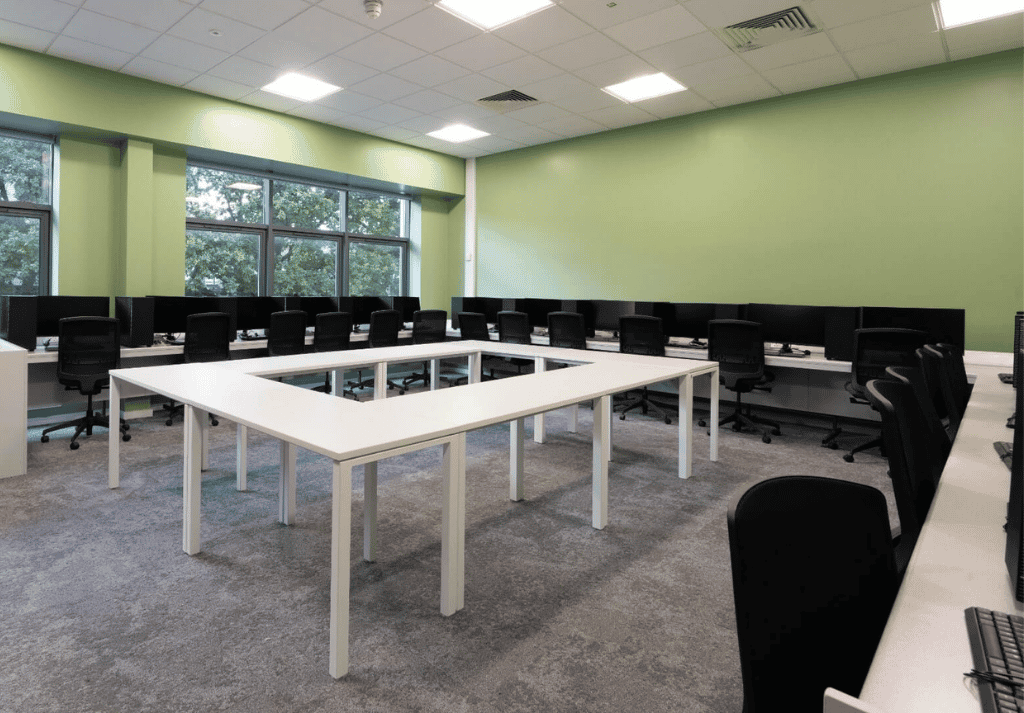
How Seating Should Support Growing Primary School Children
As children grow, their furniture needs to change with them. A suitable classroom chair should provide appropriate support while allowing pupils to sit comfortably and maintain a suitable working position.
Schools should avoid assuming that one chair size will suit every pupil. Children in the same year group can vary considerably in height, so providing appropriate furniture sizes can help create a more comfortable learning environment.
Comfort matters. Pupils spend a significant proportion of the school day seated, working, listening and collaborating, making the quality and suitability of classroom seating an important consideration. Understanding the principles behind comfortable and supportive seating can help when assessing furniture for longer periods of seated learning. Durability is equally important. Primary school furniture needs to withstand frequent movement, cleaning and everyday wear, so strong frames and hard-wearing surfaces can provide better long-term value.
What Makes Furniture Right for Secondary School Students
Secondary school furniture needs to reflect the changing needs of older students. At this stage, classrooms often need to support independent study, group discussion, presentations and technology-based learning.
Height-adjustable furniture can also provide greater flexibility where students of different heights use the same workspace. Height adjustable desks can be particularly useful where schools want workstations that can be adapted to different users.
When choosing classroom furniture for secondary school students, consider:
- Independent study: Individual desks with suitable work surfaces provide students with their own dedicated workspace for focused learning.
- Group work: Modular or easily reconfigured tables make it simple to create collaborative layouts for group activities and discussions.
- Technology: Desks should provide sufficient space for laptops, tablets and other devices alongside books and learning materials.
- Flexible teaching: Mobile furniture allows teachers to quickly change the classroom layout to suit different lessons and teaching styles.
- Examinations: Easily rearranged individual workstations can help schools create suitable layouts for tests and examinations.
- Informal learning: Breakout tables and comfortable seating can provide alternative spaces for discussions, independent work and less formal learning activities.
The appearance of the classroom can also become increasingly important. Modern classroom furniture can help secondary spaces feel professional, contemporary and appropriate for older students, while flexible furniture allows teachers to adapt the environment to different teaching methods.
How to Keep Classroom Furniture Flexible and Stackable Across Year Groups
School classrooms rarely have one fixed purpose. A space may need to accommodate lessons, group activities, examinations, presentations or extracurricular activities, so furniture that can be easily moved and stored can provide significant practical benefits.
Stackable chairs are particularly useful when classrooms need to be cleared quickly. They can be moved and stored efficiently, making them a practical choice for multi-purpose learning spaces. Schools can explore stacking chairs when looking for seating that offers greater flexibility.
Mobile tables can also be repositioned for different teaching styles, while folding and modular furniture can provide additional flexibility where space needs to be adapted regularly.
Flexible furniture can help schools make better use of existing classroom space while reducing the need for completely different furniture solutions for every activity.
This can be particularly useful in schools where classrooms are shared between different year groups. Furniture that can be adjusted or rearranged can help accommodate pupils with different requirements throughout the school day.
Making the most of available floor space is particularly important in smaller classrooms, where every square metre needs to work effectively. The same principles of careful planning, flexible layouts and appropriately sized furniture can be applied when considering how to optimise space in a small office.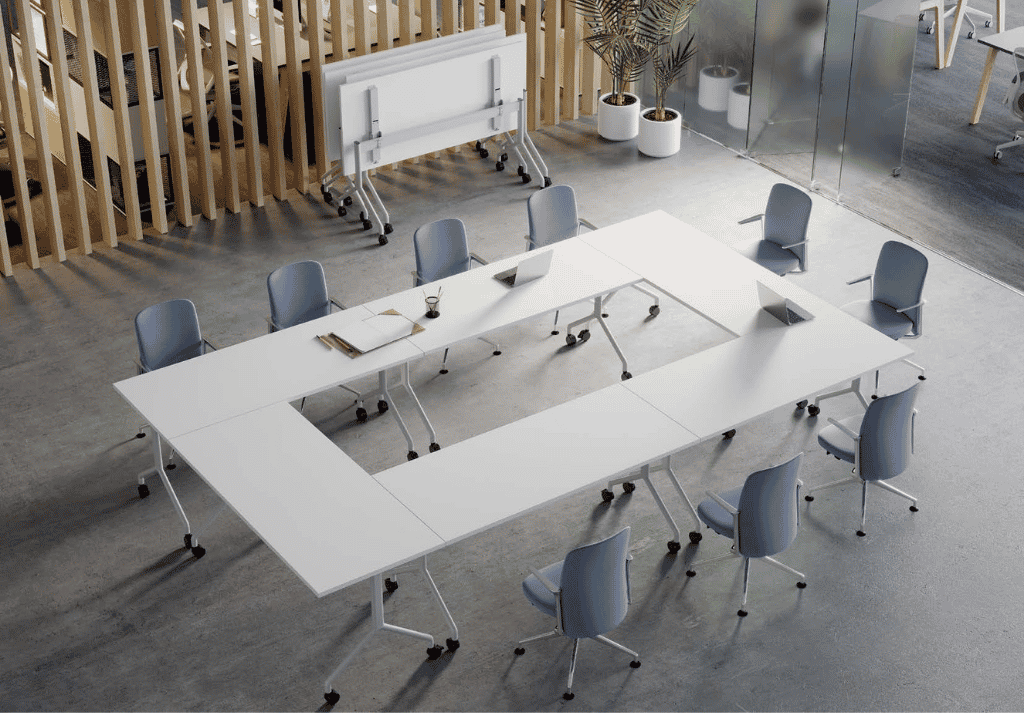
Which Materials and Finishes Last Longest in a Busy School Setting
School furniture needs to cope with considerably more wear and tear than furniture in many other environments. Tables and chairs are moved regularly, surfaces require frequent cleaning and furniture may be used by hundreds of pupils over its lifetime.
When selecting seating, schools should consider both durability and comfort. Ergonomic seating principles can provide useful guidance when assessing how different chair designs support users during longer periods of seated activity.
| Material / finish | Key benefit |
| MFC | Durable, practical and available in a wide range of finishes |
| Laminate | Hard-wearing and easy to clean |
| Powder-coated metal | Strong and resistant to everyday knocks |
| Timber-based materials | Natural appearance and suitable for many educational settings |
| Recycled materials | Can support sustainability objectives |
Look beyond appearance
A furniture finish may look attractive when first installed, but schools should also consider how it will perform over time. Durable materials and easy-clean finishes can help furniture withstand the demands of a busy educational environment.
Schools should also consider whether individual components can be repaired or replaced if they become damaged. Choosing robust classroom furniture at the outset can help reduce maintenance requirements and provide better long-term value.
For schools where students need secure storage for coats, bags or personal belongings, school lockers can also help keep classrooms and shared areas organised.
Sustainability is another consideration for many schools. Furniture manufactured using recycled or responsibly sourced materials can help support wider environmental objectives while still providing the durability required for everyday use.
How BT Office Can Help You Furnish Classrooms for Every Year Group
Choosing the right school furniture means finding the right balance between comfort, durability, safety, flexibility and age-appropriate design. This is particularly important when selecting furniture for different stages of a child’s education, as the requirements of an early year’s classroom can differ significantly from those of a secondary school.
At BT Office, we offer a comprehensive range of classroom furniture, including classroom tables, school chairs, classroom storage and flexible furniture solutions. Whether you’re looking for early years classroom furniture, updating primary school furniture or creating modern secondary learning spaces, we can help you choose products that meet the needs of your pupils, teachers and available space.
When selecting classroom furniture for early years settings, we understand the importance of appropriately sized, safe and durable products that can withstand the demands of a busy learning environment. Our wider range of classroom furniture also provides flexible solutions that can support changing requirements as pupils progress through school.
From refreshing a single classroom to furnishing a larger educational facility, our team can help you make the most of your available space while creating practical, comfortable and adaptable learning environments.
Planning a new classroom or updating your existing school furniture? Get in touch with BT Office to discuss your requirements and find the right classroom furniture for every year group.
Frequently Asked Questions About Classroom Furniture for Different Year Groups
What size chairs and tables are recommended for early years classrooms?
There isn’t one universal size that will suit every early years classroom. Furniture should be selected according to the height and age of the children using it, with appropriate seat and table heights allowing pupils to sit comfortably and work independently. Schools should also consider stable construction, rounded edges and child-friendly proportions when selecting early years classroom furniture.
How often should schools replace classroom furniture?
There is no fixed replacement period for school furniture. Its lifespan depends on factors such as construction quality, frequency of use, maintenance and the environment in which it is used. Rather than replacing furniture simply because it has reached a certain age, schools should regularly assess its condition and replace items when they become damaged, unstable, excessively worn or no longer suitable for the pupils using them.
Are height adjustable desks worth it for growing school children?
Height adjustable desks can be a useful option for schools looking for greater flexibility. They can accommodate pupils of different heights, adapt as children grow and potentially extend the useful life of a workstation. However, whether they are the right choice will depend on the age group, classroom requirements, available space and school budget.
What is the safest material for early years classroom furniture?
There isn’t one material that is automatically the safest for early years furniture. The overall construction and design are just as important as the material itself. Schools should look for robust, non-toxic and easy-to-clean materials combined with rounded edges, stable construction and appropriate safety standards. Furniture specifically designed for educational environments can help provide a safe and practical solution for younger children.