


How to Optimise Serviced Office and Coworking Fit-Outs
Serviced offices and coworking environments are no longer just about desks and chairs, they function as fully integrated commercial ecosystems designed to maximise flexibility, optimise occupancy rates, and deliver a consistent, high-quality user experience. In today’s market, a successful serviced office fit out or coworking space fit out must go far beyond aesthetics, carefully balancing spatial density with comfort, acoustics, and long-term adaptability while remaining intuitive and easy to navigate for everyday users.
This means considering how people move through and use the space hour by hour, whether they are taking calls, collaborating in teams, or working independently and designing environments that can seamlessly support all these behaviours within the same footprint. High-performing spaces also need to accommodate fluctuating demand, meaning layouts, furniture systems, and breakout zones must be flexible enough to evolve without disruption, while still maintaining a professional and cohesive feel.
If you’re new to how these projects are structured, it’s useful to first understand what sits behind a professional delivery process and how each design decision impacts performance, cost, and usability across the entire workspace. You can explore that foundation in this overview of What is an Office Furniture Fit Out.
Key Takeaways
| Flexibility drives revenue: adaptable layouts and modular furniture let operators rebalance space with demand and lift revenue per square metre. |
| Zone the floorplate into quiet focus areas, collaboration zones, private offices and breakout/social space. |
| Modular, reconfigurable furniture (desks, seating, storage) lets one space change function through the day with no construction. |
| Acoustics are critical in high-density spaces — use acoustic pods, ceiling treatments and zoning, not afterthought fixes. |
| Comfort and ergonomics drive member retention; commercial-grade, hard-wearing materials protect lifecycle value. |
| Future-proof with modular infrastructure that adapts without redevelopment. |
Why Serviced Offices and Coworking Hubs Need a Different Fit-Out Approach
Unlike standard office leases, serviced offices and coworking hubs operate on high turnover, shared usage, and evolving tenant needs. This means the design must support multiple work styles within the same footprint.
A traditional office fit-out focuses on a single team with fixed desks, but a coworking space fit out must accommodate freelancers, startups, hybrid teams, and corporate satellite offices simultaneously.
| Factor | Traditional office fit-out | Serviced / coworking fit-out |
| Tenant | Single team, fixed desks | Freelancers, startups, hybrid & satellite teams |
| Usage | Predictable, lower turnover | High footfall, shared, high turnover |
| Layout | Largely fixed | Frequently reconfigured; modular |
| Priority | Brand & function for one occupier | Occupancy, flexibility, community |
| Furniture | Fixed installations | Modular, reconfigurable, ergonomic |
| Privacy | Built-in | On-demand (pods, glass partitions) |
A well-planned serviced office fit out anticipates these challenges from the start rather than reacting to them later.
How to Plan a Flexible Layout That Maximises Occupancy
Flexibility is not just a design preference; it directly affects revenue per square metre in any serviced office fit out. The more adaptable your layout, the more effectively you can respond to changing demand.
Effective planning typically combines zoning strategies, scalable desk density, and circulation design, all of which are central to modern workplace planning approaches like those explored in Modern Office Design Layout and Space Planning.
A well-structured layout usually separates the space into:
- Quiet work zones
- Collaboration areas
- Private offices
- Flexible breakout spaces
This layered approach ensures the space never feels static, even when fully occupied.
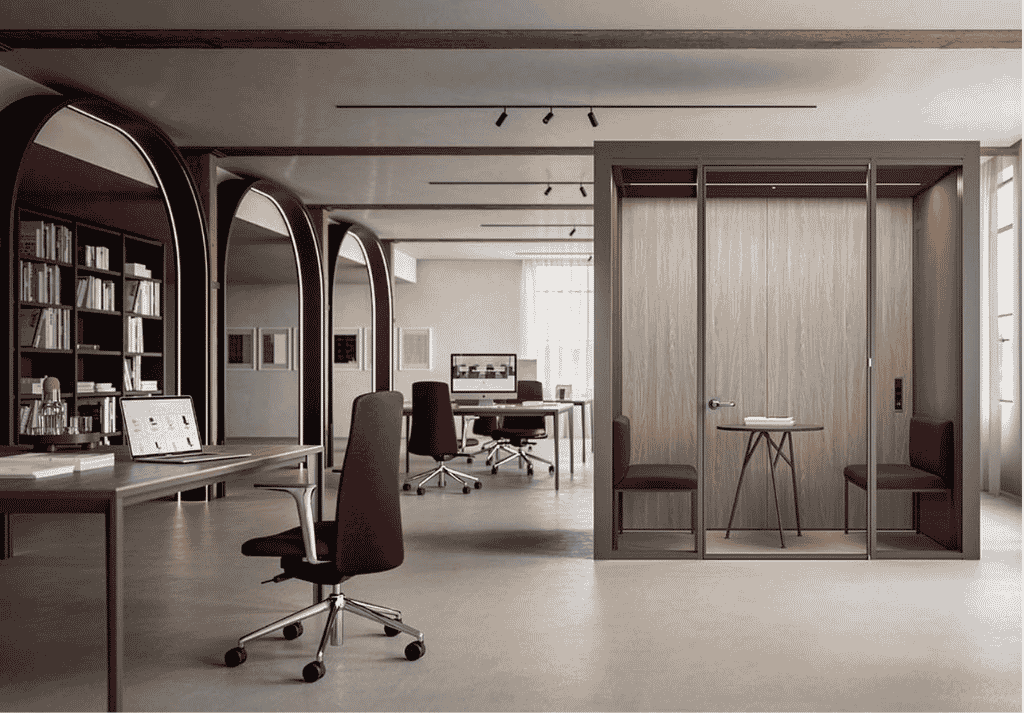
Why Modular and Reconfigurable Furniture Wins in Shared Spaces
In a high-performing coworking space fit out, modular furniture is what allows operators to pivot quickly between layouts without downtime, disruption, or costly refurbishment work.
Unlike fixed installations, modular systems are designed around movement and adaptability, meaning the same space can function as a hot-desking zone in the morning, a collaboration hub in the afternoon, and an event space in the evening, all without structural changes.
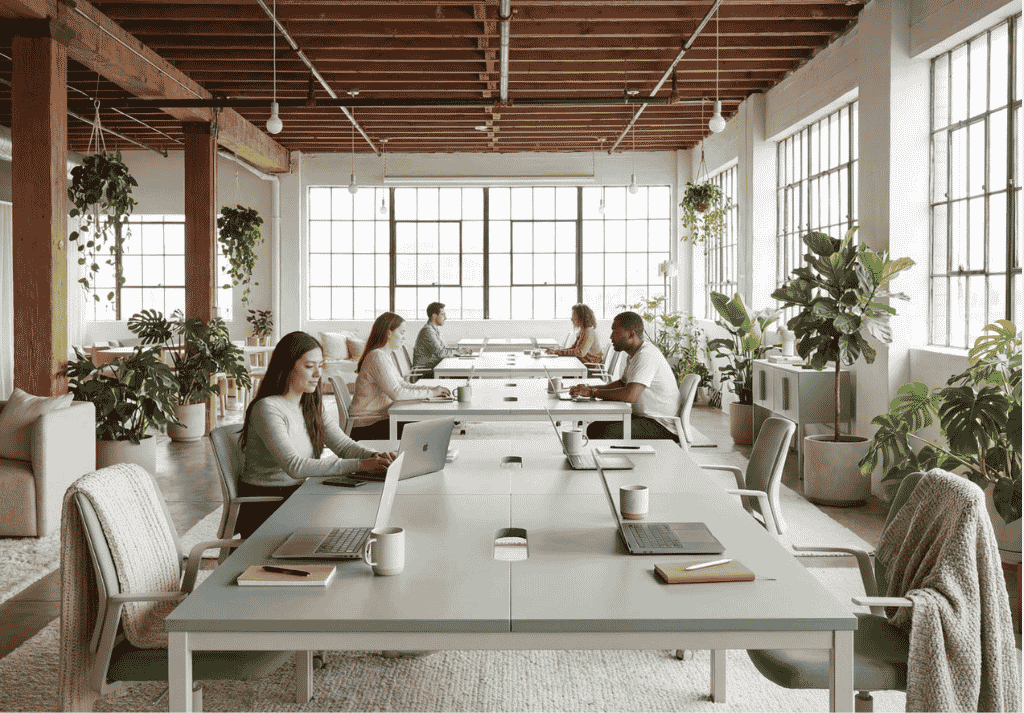
This flexibility is particularly important in serviced environments where occupancy levels fluctuate daily, and revenue is directly tied to how efficiently space is used. Instead of committing square metres to a single function, modular furniture allows operators to continuously rebalance layouts based on demand, team size, or even seasonal usage patterns.
Beyond desks, modularity also extends to seating, storage, and soft seating zones. Lightweight, reconfigurable elements make it easier to create informal meeting areas, quiet focus pods, or larger collaborative setups depending on user requirements at any given time. This adaptability not only improves operational efficiency but also enhances user satisfaction by giving tenants more control over how they work within the space.
This is why many operators increasingly invest in systems like flexible collaborative setups, which are purpose-built for dynamic environments where change is constant. These solutions support both scalability and design consistency, ensuring that even when layouts evolve, the overall aesthetic and functionality of the space remain cohesive. You can explore these approaches further through Collaborative Office Furniture.
How to Balance Private Offices with Open Coworking Zones
A successful serviced office fit out avoids extremes. Too much openness reduces focus and productivity, while too many enclosed rooms can limit interaction, networking, and the sense of community that makes coworking spaces valuable in the first place.
The most effective layouts typically blend:
- Open hot-desking zones for density
- Glass-partitioned private offices for confidentiality
- Meeting rooms for structured collaboration
- Informal lounge areas for social interaction
This mix creates a layered working environment where users can naturally move between different modes of work throughout the day, rather than being locked into a single setup.
Beyond just providing variety, this balance also improves space efficiency. Hot-desking areas maximise occupancy, while private offices support longer-term tenants who need stability and focus. Meanwhile, shared meeting rooms and lounge spaces reduce the need for duplicated facilities across individual suites, helping operators optimise floorplate usage in a coworking space fit out.
Well-designed zoning also improves acoustic control and reduces visual clutter, which helps prevent the “overcrowded” feeling often found in poorly planned shared environments. When executed properly, this balance makes the workspace feel both energetic and controlled, supporting collaboration without sacrificing productivity or comfort.
Which Furniture Choices Drive Member Retention and Daily Comfort
Furniture has a direct impact on how long members stay in a coworking environment. In fact, comfort often influences retention more than location or price in a coworking space fit out, because it directly affects how productive, supported, and at ease users feel during long working hours.
High-performing spaces tend to prioritise ergonomic seating, adaptable workstations, and collaborative zones designed for different working modes. When users can work comfortably for extended periods without physical strain or disruption, they are far more likely to renew memberships and recommend the space to others, both of which are critical for occupancy stability and long-term revenue.
Bench desk systems are particularly effective because they allow operators to scale seating efficiently while maintaining a clean, unified aesthetic, as seen in Bench Desks. Beyond efficiency, they also support consistency across the workspace, which helps reduce visual clutter and creates a more organised, professional environment.
From a user perspective, well-chosen furniture reduces friction in everyday work. Ergonomic chairs minimise fatigue, flexible desks support different working styles, and well-planned collaborative zones make it easier to switch between focus work and teamwork without leaving the space. This convenience builds habitual usage, members are more likely to stay all day, use more services, and view the workspace as their primary working environment.
Over time, this combination of comfort, usability, and spatial consistency becomes a key differentiator in competitive coworking markets, directly influencing satisfaction, retention, and word-of-mouth growth in a serviced office fit out.
How to Design for Acoustics and Privacy in High Density Spaces
Noise management is one of the most critical challenges in any serviced office fit out, especially in high-density coworking environments where multiple activities happen simultaneously.
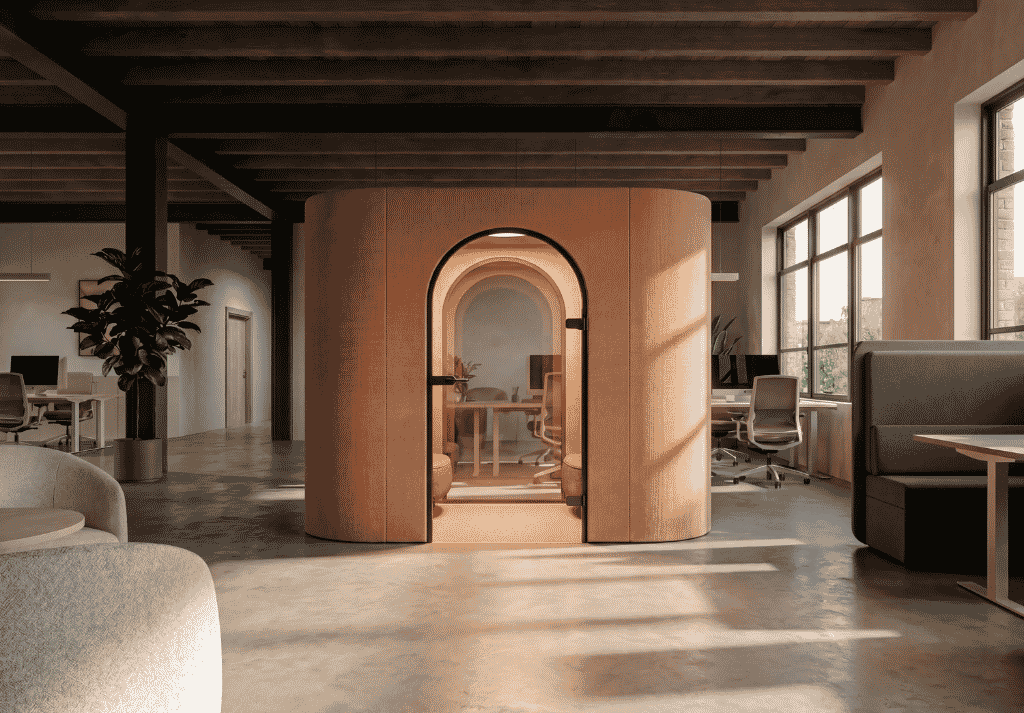
Instead of treating acoustics as an afterthought, successful designs integrate sound control into the layout itself through ceiling treatments, zoning, and enclosed focus areas.
One of the most effective solutions is the use of dedicated acoustic pods, which provide instant privacy without requiring permanent construction, such as those shown here: Office Pods.
What Real Fit-Out Projects Reveal About Cost and Durability
When planning a coworking space fit out, cost should never be viewed in isolation. The real metric is lifecycle value, how long furniture and finishes last under heavy daily use.
Real-world projects demonstrate that flexible, stock-based solutions can significantly reduce downtime and improve long-term adaptability, as shown in this project: HPH Ltd Flexible Fit-Out Case Study.
How Hard-Wearing Materials Protect Your Long-Term Investment
Durability becomes essential in shared environments where furniture is used continuously by different users every day.
In a well-planned serviced office fit out, long-term cost efficiency is achieved by selecting materials that withstand constant use, including reinforced frames, commercial-grade surfaces, and heavy-duty upholstery designed for high traffic.
How to Future Proof a Workspace for Changing Tenant Needs
Future-proofing is about ensuring your workspace can evolve without major disruption or redevelopment costs. In a coworking space fit out, this is particularly important due to fluctuating demand and changing tenant expectations.
The most resilient spaces are built around modular infrastructure and adaptable layouts that can shift without construction work.
A key part of this flexibility comes from understanding how office systems evolve over time, which is closely tied to planning approaches like those outlined in How Long Does an Office Fit Out Take.
How BT Office Can Help You Fit Out Your Serviced Office or Coworking Hub
Delivering a high-performance serviced office fit out requires far more than selecting furniture and arranging desks. It demands careful coordination between spatial design, furniture specification, acoustics, and operational planning. Without alignment across these elements, even visually impressive spaces can underperform in terms of occupancy, usability, and long-term efficiency.
BT Office supports projects from early concept through to final installation, helping operators and landlords create environments that are not only visually consistent but also commercially optimised for high-density, multi-user workspaces. This includes advising on layout strategy, selecting durable furniture systems suited to heavy daily use, and ensuring each zone within a coworking space fit out is designed to support real-world working behaviours.
We can manage multiple locations, maintaining a consistent brand aesthetic is critical. BT Office helps standardise furniture specifications, finishes, and spatial layouts so that each site delivers the same look, feel, and user experience. This consistency strengthens brand identity, improves user recognition across locations, and supports scalable growth strategies for coworking providers expanding across regions.
Frequently Asked Questions About Serviced Office and Coworking Fit-Outs
How much does a serviced office fit-out usually cost
Costs vary depending on size, specification, and quality of finishes. A serviced office fit out can range widely based on whether the project is budget-led or premium in execution.
What furniture works best for a coworking space
The most effective furniture in a coworking space fit out includes modular desks, ergonomic chairs, collaborative seating, and acoustic solutions that support both focus and interaction.
How long does a coworking hub fit-out take
Timelines vary depending on scope, but most projects typically take several weeks to a few months depending on complexity, procurement, and installation sequencing.
How can you make a shared workspace feel less crowded
The best approach is to use zoning, lighting variation, acoustic separation, and varied furniture layouts to create visual and functional breathing space within a serviced office fit out.
What is the difference between a serviced office and a coworking space?
A serviced office is a private, fully-managed office suite rented by one business on flexible terms, while coworking is shared, open-plan space where individuals or teams rent desks or memberships. Many operators now offer both in one building.
How do you maximise occupancy in a coworking space?
Use flexible zoning and modular furniture to scale desk density with demand, mix hot-desks with private offices to suit different tenants, and share meeting and lounge facilities so floorspace isn’t duplicated.