


Bench Desks vs. Standard Desks: Which Is Better for Collaboration
Choosing the right office desk layout is more than a furniture decision, it directly impacts how your team communicates, focuses, and performs. For SME owners and office managers planning a workspace upgrade, one of the most common comparisons is bench desks vs standard desks.
Both options have clear strengths, but they support very different working styles. In this guide, we’ll break down the differences, benefits, and ideal use cases so you can decide which setup best supports collaboration in your workplace.
Key Takeaways
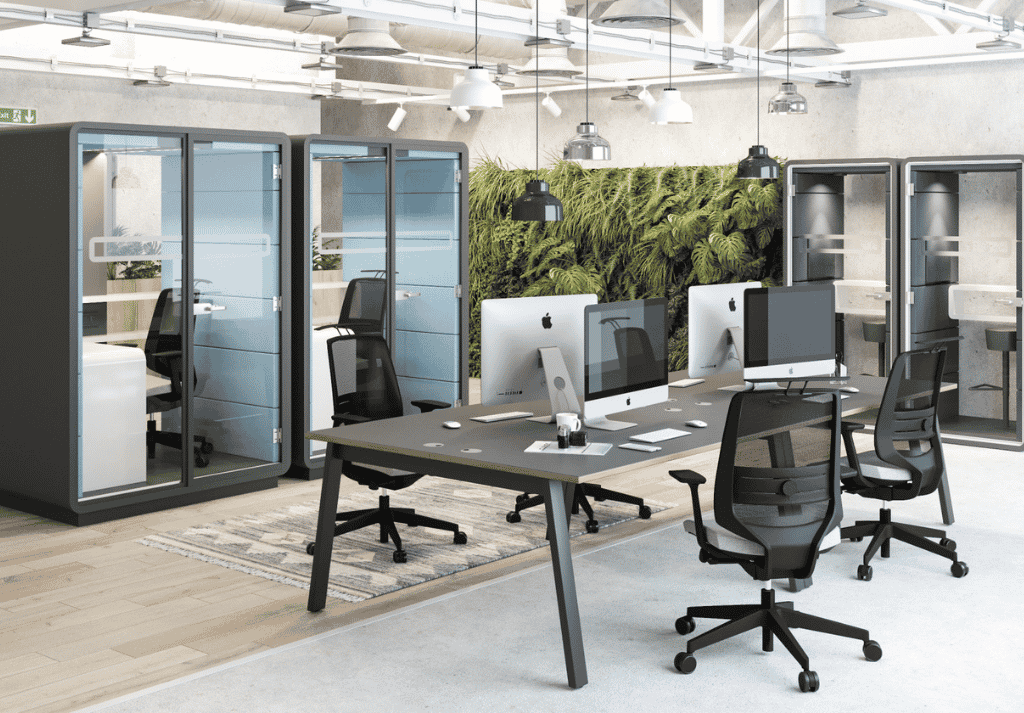
| Bench desks = shared, continuous workstations for 2–8 people. Best for collaborative, open-plan teams; most space- and cost-efficient per workstation. |
| Standard desks = standalone workstations for one person. Best for focus-heavy, confidential or independent roles. |
| Collaboration: bench desks win. Privacy/focus: standard desks win. |
| Floor efficiency: bench layouts can fit ~15–20% more people in the same footprint than equivalent standalone desks (industry rule of thumb). |
| UK standard dimensions: 725 mm high, 600 or 800 mm deep (per BS EN 527-1). |
| Hybrid offices often mix both — bench rows for project teams + standard desks for managers and confidential roles. |
What Is the Difference Between Bench Desks and Standard Desks?
At a basic level, the distinction comes down to shared workspace vs individual workspace, but in practice the difference goes much deeper than just layout. The type of desk you choose has a direct impact on how people interact, how information flows through the office, and how effectively different working styles are supported on a day-to-day basis. Bench systems tend to create a more connected, team-oriented environment, while standard desks reinforce personal space, structure, and focused working conditions.
How bench desks are designed for shared working
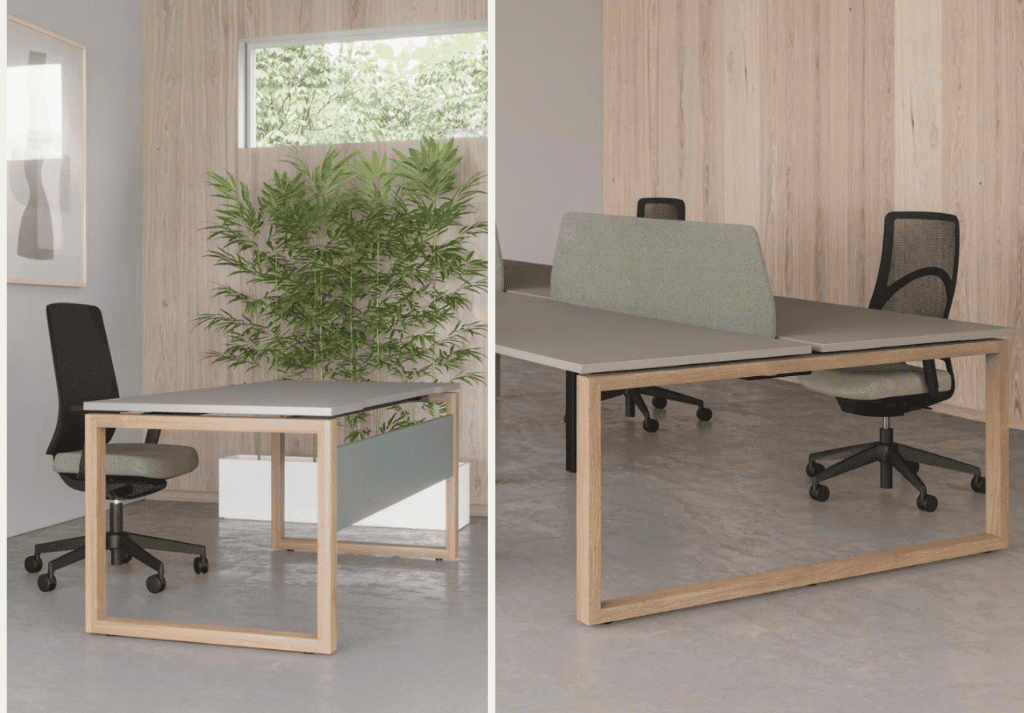
Bench desks are long, continuous workstations that seat multiple employees together with minimal separation. This bench desk setup encourages openness, communication, and collaboration across teams by reducing physical barriers and making it easier for colleagues to interact throughout the working day.
Key characteristics include multiple users sharing one extended workstation, minimal physical barriers between employees, centralised cable management systems that keep the workspace organised, and flexible team layouts that can be adjusted as businesses grow or restructure.
How standard desks are built around individual ownership
Standard desks are standalone workstations designed for one person, offering more privacy and personal space. This makes them particularly well suited to bench desk vs individual desk considerations where roles require focus, confidentiality, or independent working, and employees benefit from having a clearly defined personal workspace.
Because each desk operates as its own unit, standard desk setups are often easier to organise into structured zones within an office, helping businesses separate teams, reduce noise levels, and support different working styles across departments. They also tend to offer more personal storage options and allow employees to customise their workspace more freely, which can be important for comfort and long-term productivity.
Why Bench Desks Naturally Encourage Collaboration in the Workplace
If collaboration is a priority, bench desks are often the preferred choice in the bench desks vs standard desks debate because their open-plan layout removes physical barriers between colleagues and makes communication more immediate and natural. This setup helps teams work more fluidly, especially in environments where quick decision-making and shared problem-solving are part of the daily workflow.

The advantages of this approach are widely recognised in workplace design research, including the key benefits outlined in 5 benefits of office bench desks, which explores how bench desk systems can improve communication, teamwork, and overall office efficiency.
Bench desk environments support faster communication between team members, reduce delays caused by moving between separate workstations, and make it easier for colleagues to collaborate on shared tasks in real time. They also improve team visibility, which can strengthen awareness of ongoing projects and encourage more spontaneous idea sharing throughout the working day.
They are especially effective in fast-moving, creative, or project-based environments where collaboration is continuous rather than occasional. In addition to their functional benefits, bench desks are also highly flexible in design, with a wide range of sizes, leg styles, cable management solutions, and integrated power options available. This makes them easy to tailor to different office layouts and team requirements, whether you are fitting a compact workspace or a large open-plan office.
When Standard Desks Are the Better Choice for Your Office
Standard desks are often the best choice in workplaces where focus, privacy, and individual productivity are more important than constant collaboration in the bench desk vs individual desk comparison. They provide employees with their own dedicated space, which helps reduce distractions and supports tasks that require sustained concentration.
They are particularly effective in environments where employees need to carry out work independently, such as roles involving detailed analysis, administration, or confidential information handling. Because each person has their own defined workstation, it becomes easier to maintain privacy and control over sensitive tasks.
Standard desks also tend to work well in offices where noise levels need to be kept low. The physical separation between users naturally helps reduce disruption, making it easier for staff to stay focused throughout the day.
From a long-term planning perspective, standard desks can also offer flexibility for growing companies. They are straightforward to reconfigure, scale, or relocate as teams expand or change structure. This makes them a reliable option for businesses that expect to evolve over time while still maintaining an organised and adaptable workspace structure.
Bench Desks vs Standard Desks: A Side-by-Side Comparison
While bench desks vs standard desks can both work effectively in modern offices, they are designed to support very different ways of working. Bench systems prioritise shared space, communication, and efficient use of floor area, whereas standard desks focus more on individual comfort, privacy, and structured personal working environments.
| Feature | Bench Desks | Standard Desks |
|---|---|---|
| Collaboration | High | Moderate/Low |
| Privacy | Low | High |
| Space efficiency | High | Moderate |
| Flexibility | High | High |
Bench desks tend to perform best in environments where teamwork is constant, and information needs to flow quickly between colleagues. Their open structure reduces physical separation, making it easier for teams to communicate and stay aligned on shared projects. This can also improve space efficiency, as more people can often be accommodated within a smaller footprint compared to individually framed workstations.
Standard desks, however, are better suited to roles that require sustained concentration or confidentiality. Because each employee has their own defined workspace, there are fewer distractions and a stronger sense of ownership. This can improve productivity for tasks that require focus, accuracy, or independent decision-making.
Both systems offer flexibility, but in different ways. Bench desks are typically more flexible in terms of scaling teams and reconfiguring layouts quickly, while standard desks offer flexibility in personal setup and individual working preferences.
For a more detailed breakdown of how bench systems perform in real office environments, you can explore the office bench desk guide, which looks more closely at layout performance, practical applications, and real-world use cases across different types of workplaces.
How Your Office Layout Affects Desk Choice
Your desk choice should always align with your wider office layout, rather than being made in isolation. The way space is planned and organised has a direct impact on how effectively employees can collaborate, concentrate, and move around the workspace.
When planning specifically for bench systems, space planning becomes especially important. Bench desks are designed to maximise floor efficiency in open-plan environments, but they still need careful consideration around spacing, circulation routes, and team positioning to ensure the layout supports both productivity and comfort. Poor planning can lead to overcrowding or noise issues, while well-structured layouts can significantly improve workflow and team interaction.
If you’re focusing on detailed layout planning, including how to structure seating arrangements, optimise space usage, and balance collaboration with personal working zones, designing modern and creative workspaces with bench desks guide provides a useful starting point.
Which Desk Type Works Best for Focus and Individual Work?
Standard desks generally perform better for focus-heavy roles because they provide a clearly defined personal workspace with fewer visual and acoustic distractions. When comparing bench desk vs individual desk, this is where standard desks typically have the advantage.
Standard desks also make it easier to establish routine working habits. Because the space is not shared, employees can set up their workstation in a way that suits their individual workflow, whether that involves multiple monitors, document space, or specific ergonomic arrangements. Over time, this consistency can improve efficiency and reduce the cognitive load of constantly adapting to different setups.
Bench desks, on the other hand, can still support focus work, but they are naturally more collaborative and open by design. This means they often require additional acoustic planning or spatial separation to achieve the same level of concentration. Without these considerations, nearby conversations and movement can become distracting for tasks that require deep focus.
However, when properly designed, bench desk environments can strike a balance between collaboration and concentration. The use of acoustic screens, thoughtful seating arrangements, and designated quiet zones within a bench layout can help reduce interruptions while still maintaining the benefits of a shared workspace. This makes bench systems more suitable for teams that need both communication and periods of individual focus throughout the day.
What to Consider Before Choosing Between Bench Desks and Standard Desks
Before deciding between bench desks vs standard desks, it’s important to think about how your team works on a day-to-day basis. If collaboration and quick communication are central to their roles, a more open bench-style setup may be suitable. If the work is more independent and requires concentration, standard desks may be the better fit.
You should also consider the physical space available in your office. Bench desks can make more efficient use of open-plan layouts, while standard desks may be better suited to offices that need clearly defined zones or quieter working areas.
Future growth is another key factor. If your business is likely to expand, you may want a solution that can scale easily as headcount increases. Budget considerations also play a role, as different desk systems can vary in upfront cost and long-term flexibility.
Finally, employee wellbeing should not be overlooked. Comfort, privacy, noise levels, and overall working conditions all influence productivity and satisfaction, so the right desk choice should support both performance and day-to-day comfort.
For more structured guidance on planning an effective office layout, explore how to create a collaborative workspace which covers how to design workspaces that balance collaboration, focus, and flexibility.
How BT Office Can Help You Choose the Right Setup
If you’re unsure which layout best suits your business, BT Office provides practical support in helping organisations choose between bench desks and standard desks based on how their teams work, not just how the space looks. The right decision often depends on a mix of factors such as collaboration levels, space availability, future growth plans, and the balance between focused and team-based work, which can be difficult to assess without experience in office planning.
Beyond simply supplying furniture, BT Office helps businesses think through how different layouts will function in real working environments. This includes understanding how bench systems can improve communication and space efficiency, as well as when standard desks may be more appropriate for roles that require privacy, concentration, or structured individual work.
Book a free 30-minute office layout consultation with a BT Office space planner where we’ll review your floor plan, recommend a bench/standard mix, and send a budgeted CAD layout within 5 working days. Request your consultation.
Frequently Asked Questions
Can bench desks support privacy and focus time?
Yes, bench desks can support privacy and focused work, but they are not naturally designed for it. Because the layout is open and shared, employees may experience more visual and acoustic distractions compared to standard desks.
That said, this can be improved significantly with the right office design choices. Many businesses add acoustic screens, desk dividers, or position quieter tasks away from high-traffic areas to create a better balance between collaboration and concentration.
How many people can typically share a bench desk in an office?
Most bench desk systems are designed to accommodate between two and eight people in a single continuous run, depending on the product range and office layout. Smaller setups are common in compact offices, while larger modular systems are often used in open-plan environments where teams need to scale easily.
The exact number will usually depend on available space, power access, and how the team prefers to work day to day.
Are bench desks more cost effective than buying individual standard desks?
In many cases, bench desks are more cost effective, especially when furnishing larger offices. Because they use shared structures and reduce the need for individual desk frames, they often provide better value per workstation. They also make more efficient use of floor space, which can reduce overall office footprint requirements.
Do bench desks work well in a hybrid working environment?
Yes, bench desks can work very effectively in hybrid environments. In many modern offices, they are used alongside flexible seating arrangements, allowing employees to share workspaces when they are in the office rather than assigning fixed desks to each person.
This setup works best when combined with good organisation of storage and clear expectations around desk sharing, ensuring the space remains functional even when occupancy levels vary from day to day.
Can you mix bench desks and standard desks in the same office layout?
Yes, and in many cases, this is the most practical approach. Mixing bench desks with standard desks allows an office to support different working styles within the same environment.
For example, collaborative teams often benefit from bench desk areas where communication is frequent, while roles that require deep focus or confidentiality are better suited to standard desks. When planned well, this combination creates a balanced workspace that supports both productivity and teamwork.