


How to Evaluate Office Desk Durability Before You Buy
Investing in a new office desk is about more than appearance and price. A desk is one of the most heavily used pieces of furniture in any workspace, supporting computers, monitors, paperwork, and daily tasks for years. Understanding office desk durability before making a purchase can help you avoid costly replacements and ensure your workspace remains functional, comfortable, and professional over the long term.
A durable desk not only withstands daily wear and tear but also maintains its stability, appearance, and performance as your business grows. From the materials used in construction to the strength of the frame and quality of the finish, several factors influence how well a desk will perform over time. Choosing the right product from the outset can improve productivity, reduce maintenance costs, and deliver better value for money.
At BT Office, we understand the importance of investing in furniture that is built to last. With a wide range of office desks designed for both home and commercial environments, we help businesses find practical, high-quality solutions that combine durability, functionality, and style.
In this guide, we’ll explore the key factors that determine desk longevity and how to identify durable office desks that offer lasting value.
Key Takeaways
| Office desk durability comes down to five things: material, frame, build quality, load rating, and warranty/testing standards. |
| Solid hardwood (oak, maple, walnut) and high-pressure laminate are the most hard-wearing desktop surfaces; quality veneer is a strong middle ground. |
| Powder-coated or welded steel frames prevent wobbling and sagging — important for multi-monitor and bench desks. |
| Check for secure edge banding, strong joints (dowels, cam-locks, metal brackets) and a stated weight/load rating. |
| Look for BS EN 527 and BIFMA compliance plus a warranty covering the frame and structural components. |
| A quality office desk should last 10–20 years with proper care. |
Why Office Desk Durability Matters More Than You Think
An office desk is subjected to constant use, from supporting heavy equipment to withstanding daily movement, spills, and general wear. Choosing a desk based solely on aesthetics can lead to problems such as sagging surfaces, loose joints, scratched finishes, or unstable frames.
Prioritising office desk durability offers several advantages:
- Lower long-term replacement costs
- Improved workplace safety and stability
- Better resistance to scratches, dents, and stains
- Enhanced professional appearance over time
- Greater return on investment
Whether you’re furnishing a home office or an entire workplace, selecting a desk built to last can save significant time and money in the future.
Which Materials Make an Office Desk Last Longer
The materials used in construction have a major impact on desk lifespan.
| Material | Durability | Best for | Watch out for |
| Solid hardwood | Excellent (decades) | Premium / executive offices | Higher cost; needs occasional maintenance |
| Wood veneer | Good–excellent (quality-dependent) | Premium look on a budget | Low-grade veneer can chip or peel |
| High-pressure laminate | Very good | Busy commercial offices | Performance depends on the core board |
| MDF (laminate core) | Moderate | Budget / home offices | Poor moisture resistance if edges aren’t sealed |
| Steel frame/legs | Excellent | All heavy-use desks | Prefer powder-coating/welds over bolt-only joints |
Understanding the strengths and limitations of different materials can help you identify the most durable office desks for your needs. If you’re comparing material options, our guide on MDF, laminate or natural wood office desks provides a detailed breakdown of how each performs in a commercial environment.
How Solid Wood and Veneer Compare for Long Term Durability
Solid wood is often regarded as one of the most durable desk materials available. Hardwood species such as oak, maple, and walnut can withstand decades of use when properly maintained. They also offer the advantage of being repairable if scratched or damaged.
Wood veneer desks feature a thin layer of real wood bonded to a core material. While generally more affordable than solid wood, high-quality veneers can still provide excellent longevity and an attractive appearance. However, lower-quality veneers may be susceptible to chipping or peeling if exposed to excessive moisture or impact.
For businesses seeking premium office desk durability, solid wood remains a strong choice, while quality veneer desks can offer a practical balance between performance and budget.
Why Laminate and MDF Desks Can Still Be Hard Wearing
Laminate desks are often underestimated when discussing durability. Modern high-pressure laminates provide excellent resistance to scratches, stains, and everyday wear, making them ideal for busy office environments.
Medium-density fibreboard (MDF) is commonly used as the core material beneath laminate surfaces. While MDF itself is less resistant to moisture than solid wood, a properly manufactured laminate desk can deliver years of reliable performance.
Many contemporary durable office desks utilise high-quality laminate finishes because they combine affordability, low maintenance requirements, and strong resistance to daily use.
What to Know About Metal Frames and Steel Legs
The frame is just as important as the desktop itself. Steel frames and metal legs significantly enhance structural strength and stability.
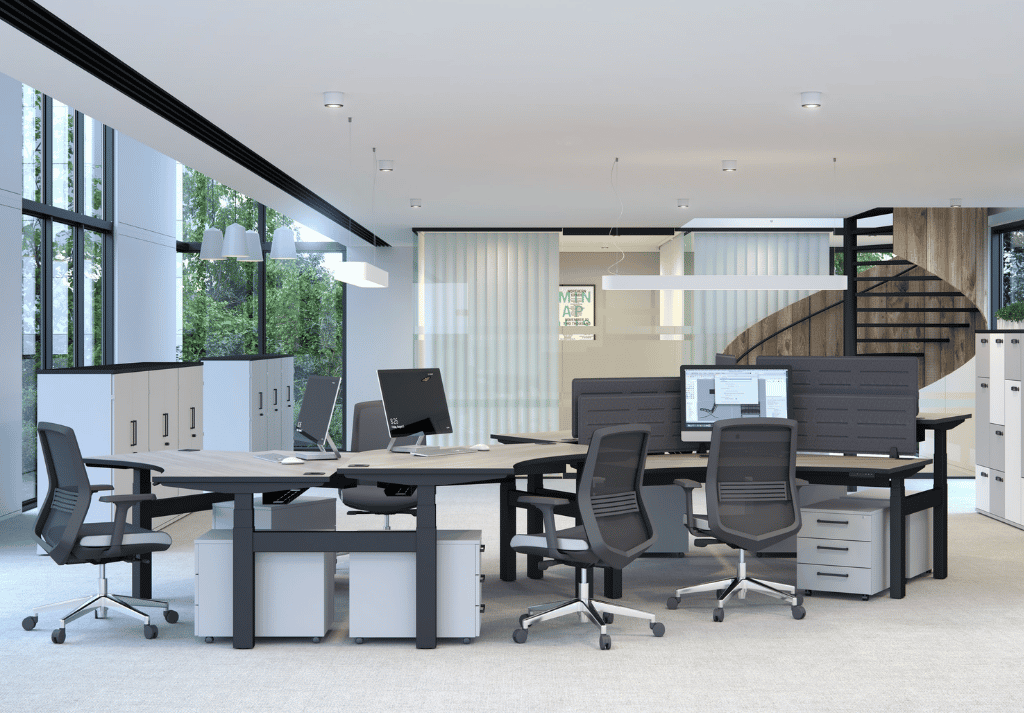
Many modern bench desks feature reinforced steel frameworks that are specifically designed to support multiple users, monitors, and office equipment while maintaining long-term stability.
When evaluating a desk, look for:
- Powder-coated steel construction
- Reinforced crossbars
- Welded joints where appropriate
- Corrosion-resistant finishes
A robust steel frame helps prevent wobbling, sagging, and movement over time, particularly in larger desks supporting multiple monitors or heavier equipment.
How to Assess the Build Quality of an Office Desk
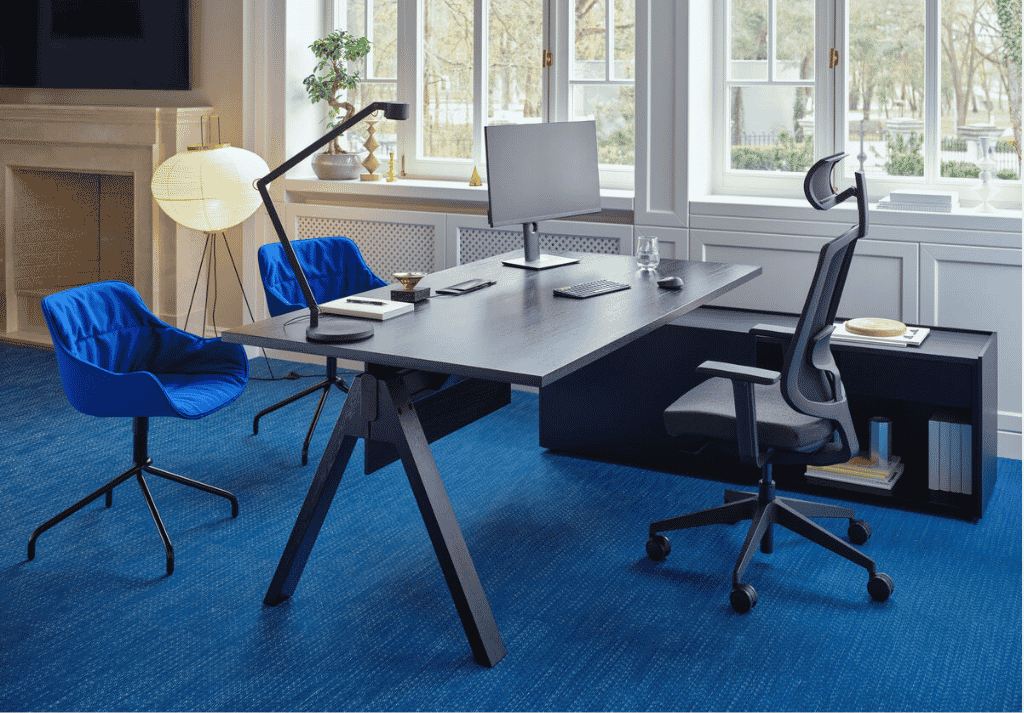
Material quality alone does not guarantee longevity. Construction methods and manufacturing standards also play a crucial role in office desk durability.
Pay close attention to overall workmanship. A well-built desk should feel solid, stable, and consistent across all components. Drawers should operate smoothly, surfaces should align evenly, and there should be no visible gaps between panels. If you’re still at the selection stage, understanding how to choose the perfect office desk for your workplace can help ensure you prioritise quality as well as aesthetics.
Examining product specifications and customer reviews can often provide valuable insights into long-term performance.
What Edge Banding and Joints Tell You About Longevity
Edge banding protects exposed board edges from moisture, impacts, and general wear. High-quality edge banding should be securely attached with no lifting or separation visible.
Joint construction is another important indicator of quality. Strong joining methods include:
- Metal fixings and brackets
- Dowel joints
- Cam-lock connectors
- Welded metal connections
Weak or poorly assembled joints are often the first point of failure in lower-quality desks. Carefully inspecting these areas can reveal a great deal about a desk’s expected lifespan.
What Weight Capacity and Load Ratings Reveal About Strength
Manufacturers typically provide weight capacity or load ratings for their desks. These figures offer useful insight into structural integrity.
Higher load ratings generally indicate stronger materials, more robust frames, and better engineering. While most standard office setups may not approach maximum capacity, a desk with a higher rating often delivers greater long-term reliability.
Different desk configurations can also affect overall strength and functionality. If you’re unsure which configuration best suits your workspace, our guide on which office desk style is right for me explores the advantages of various desk designs.
When comparing durable office desks, weight ratings can serve as a useful benchmark for overall strength.
How to Check Warranties and Testing Standards Before You Buy
A manufacturer’s warranty can be a strong indicator of confidence in product quality.
Look for desks that offer warranties covering structural components, frames, and manufacturing defects. Longer warranty periods often reflect higher construction standards. It’s also important to ensure the desk dimensions are suitable for your space, and our guide to office furniture measurements can help you understand standard sizing and workspace planning considerations.
It’s also worth checking whether products comply with recognised commercial furniture standards, including:
- EN standards for office furniture
- BIFMA testing standards
- Stability and load testing certifications
These standards help verify that a desk has undergone rigorous testing for safety, durability, and performance.
Which Early Signs of Wear You Should Watch Out For
Even a new desk can reveal clues about potential durability issues. Warning signs may include:
- Visible wobbling or instability
- Poorly aligned panels
- Loose fittings or fasteners
- Thin or peeling edge banding
- Drawer mechanisms that stick or feel weak
- Surface finishes that scratch easily
Identifying these issues before purchase can help you avoid products that may not deliver long-term value.
A truly durable desk should maintain its appearance and functionality despite years of daily use.
How BT Office Can Help You Choose a Durable Office Desk
Selecting the right desk can feel overwhelming given the wide range of materials, styles, and specifications available. BT Office helps businesses and home office users identify solutions that balance functionality, appearance, and office desk durability.
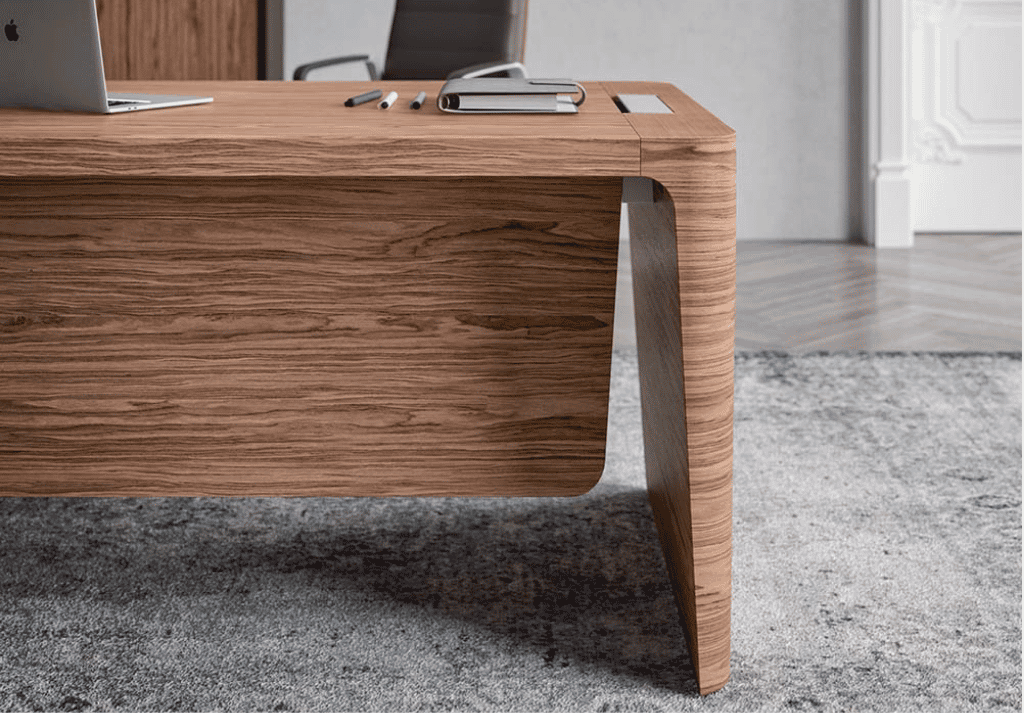
Whether you’re looking for collaborative workstations or premium furniture solutions, BT Office offers a wide range of options, including its collection of executive office desks that combine high-quality construction with professional design.
With a carefully selected range of durable office desks, expert product knowledge, and guidance tailored to your workspace requirements, BT Office can help you invest in furniture designed for long-term performance.
Frequently Asked Questions About Office Desk Durability
How long should a quality office desk last?
A quality office desk should typically last between 10 and 20 years, depending on the materials, construction quality, and level of daily use. Premium solid wood and steel-framed desks may last even longer with proper care and maintenance.
Are laminate office desks durable enough for daily use?
Yes. Modern laminate desks are highly resistant to scratches, stains, and everyday wear. High-quality laminate surfaces paired with strong core materials can provide excellent office desk durability in both home and commercial office environments.
What weight can a standard office desk support?
Most standard office desks support between 50kg and 150kg, depending on their design and construction. Heavy-duty desks with reinforced steel frames may support significantly more weight and are often preferred for multi-monitor setups.
How can you tell if an office desk is well made?
A well-made desk typically features sturdy construction, strong joints, secure edge banding, high-quality materials, smooth drawer operation, and minimal movement when in use. Reviewing load ratings, warranties, and testing certifications can also help assess overall quality and durability.