


The Complete Buyer’s Guide Checklist for Choosing the Right Office Desk
Choosing office desks may seem straightforward, but the right decision can improve productivity, employee comfort, collaboration, organisation, and even staff retention. A carefully planned office desk buying guide helps businesses avoid common workplace problems that develop when desks are chosen based only on appearance or price. The wrong desks can create cramped layouts, poor posture, wasted floor space, and operational frustrations that affect your business every day.
Whether you are fitting out a new office, refurbishing an existing workspace, or expanding your team, having a structured checklist makes the buying process far easier. This guide covers the key considerations businesses should evaluate before investing in office desks, helping you make practical long-term decisions rather than short-term purchases.
Key Takeaways
| Office desks fall into five main types: straight, bench, corner/L-shaped, executive, and height-adjustable (sit-stand). |
| UK standard commercial desks: 725 mm high, 1400–1600 mm wide, 700–800 mm deep (BS EN 527-1). |
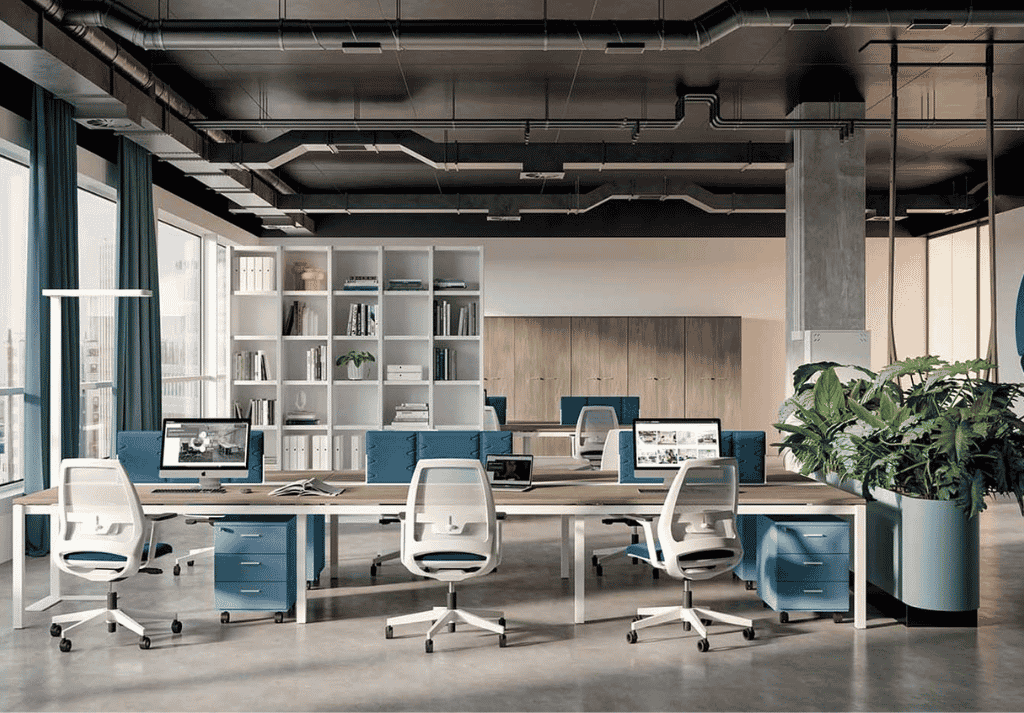
| Bench desks are the most space-efficient option for collaborative, open-plan teams. |
| Height-adjustable sit-stand desks support DSE-compliant ergonomics and hybrid working. |
| Commercial-grade laminate on a steel frame is the most durable, cost-effective choice for busy offices. |
| Measure your floor plan and plan circulation space + future growth before buying. |
Why choosing the right office desk matters more than most businesses think
Office desks are one of the most heavily used pieces of workplace furniture. Employees spend hours at them every day, meaning the quality, size, layout, and functionality of each desk directly affects how people work.
Poor desk choices can reduce productivity, limit collaboration, create unnecessary clutter, and waste valuable office space. Many workplace problems develop because businesses focus only on appearance or cost rather than how employees use the workspace every day.
The best office desk is not necessarily the most expensive option. The right choice should support the way your team works, fit comfortably within the office layout, and provide enough durability for years of daily use.
Well-designed office desks support both focused work and teamwork while helping businesses maximise available space. They also contribute to the overall appearance of the office, which can influence employee morale and client impressions.
For growing businesses especially, office desks should be viewed as a long-term operational investment rather than simply a furniture purchase.
How to work out the right desk size for your office space and team
Choosing the correct desk size is one of the most important steps in the buying process. Desks that are too small can feel restrictive, while oversized desks can waste valuable office space and reduce movement around the workplace.
The ideal desk size depends on:
- The size of your office
- How many employees you need to accommodate
- The type of work being carried out
- Equipment requirements such as dual monitors or printers
- Whether employees need storage at their workstation
- Future team growth plans
Businesses should think carefully about both current and future workspace needs before purchasing desks. Using a structured office desk buying guide can prevent expensive mistakes and ensure workstations remain practical as teams grow.
What standard office desk dimensions you should be working with
Most commercial office desks fall within standard size ranges that suit general workplace use. Understanding these measurements is essential when trying to identify the best office desk for your available space and working requirements.
Typical office desk dimensions include:
| Desk Type | Typical Width | Typical Depth |
| Compact desk | 1000mm–1200mm | 600mm |
| Standard office desk | 1400mm–1600mm | 700mm–800mm |
| Executive desk | 1800mm+ | 800mm–1000mm |
| Bench desk workstation | 1200mm–1600mm per person | 700mm–800mm |
| Corner desk | 1600mm–1800mm | 1200mm return |
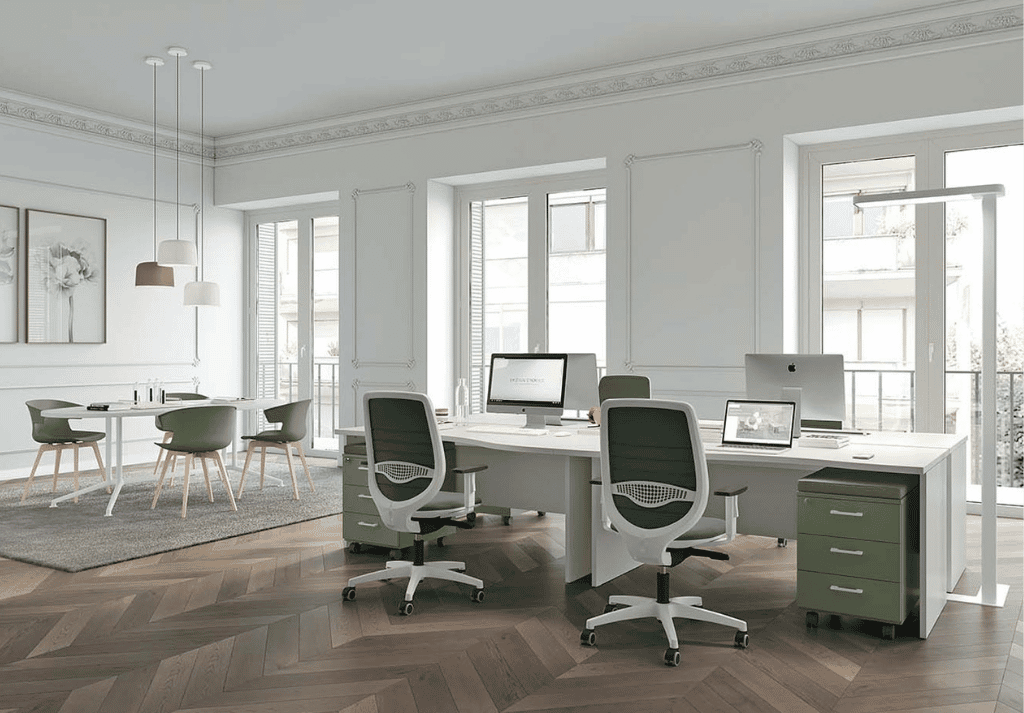
For most office workers, desks around 1400mm wide provide sufficient space for monitors, keyboards, paperwork, and everyday tasks.
However, employees using multiple screens or handling detailed project work may require larger work surfaces.
How to measure your available space before buying
Before ordering office desks, businesses should create a scaled office layout or floor plan. Reviewing accurate office measurements before buying furniture helps businesses avoid overcrowding and other workplace problems that affect productivity.
For more detailed planning advice, businesses can read this guide to office furniture measurements before finalising their office layout.
When measuring office space, businesses should consider walkways between desks, door openings, storage areas, meeting zones, accessibility requirements, natural light positioning, and future expansion space. These details are often overlooked during office planning but play a major role in preventing overcrowding and maintaining a comfortable working environment.
As a general guideline, employees should have enough room to move comfortably without desks feeling overcrowded.
It is also important to allow adequate clearance behind chairs, particularly in high-traffic areas.
Many businesses underestimate how much circulation space is needed until furniture is installed, which is why detailed planning before purchasing is essential.
What desk shape and configuration works best for different working styles
Different teams work in different ways, which means there is no single desk configuration suitable for every business.
The best office desk setup depends on how employees interact, collaborate, and complete their daily tasks.
Common desk configurations include:
Straight desks
Straight desks are one of the most versatile options and remain one of the best office desk solutions for businesses needing flexible workstation layouts. They work well in:
- Individual offices
- Administrative environments
- General office layouts
- Flexible workspaces
Overall, straight desks offer a practical balance of affordability, usability, and adaptability, making them a reliable foundation for most modern office environments. They are often chosen as a long-term solution because they can support changing business needs without requiring frequent replacement or redesign.
Bench desks
Bench desks are designed for collaborative working environments and allow multiple employees to work together in shared workstation layouts.
These are popular in:
- Open-plan offices
- Creative teams
- Sales departments
- Growing businesses needing scalable layouts
Bench desks maximise floor space while encouraging communication. Businesses looking to improve teamwork and space efficiency often choose these layouts to reduce workplace problems caused by isolated workstations.
Businesses considering collaborative layouts can also explore the benefits of office bench desks when planning modern team environments.
Corner desks and L-shaped desks
Corner desks provide larger work surfaces and help maximise unused corners.
They are ideal for:
- Management offices
- Employees needing multiple monitors
- Project-based work
- Staff handling paperwork-heavy tasks
Executive desks
Executive desks create a premium professional appearance and usually offer larger surfaces and integrated storage. They are often considered the best office desk option for leadership spaces where functionality and client presentation both matters.
Companies creating leadership or client-facing spaces may also benefit from reading why executive desks remain a valuable office investment.
These are commonly used in:
- Director offices
- Boardrooms
- Senior management spaces
Collaborative and modular workstations
Modular systems provide flexibility for changing teams and evolving office layouts.
Businesses planning future growth often benefit from modular desk systems because they can be expanded or reconfigured more easily over time.
Why desk material and build quality should be on your checklist
Desk appearance matters, but durability and build quality are even more important in busy commercial environments.
Office desks experience daily wear from equipment, movement, spills, and constant use. Choosing durable materials helps businesses minimise long-term workplace problems linked to damaged or unstable furniture. Choosing poor-quality materials may initially save money but often leads to repairs and replacements much sooner.
Common office desk materials include:
Laminate desks
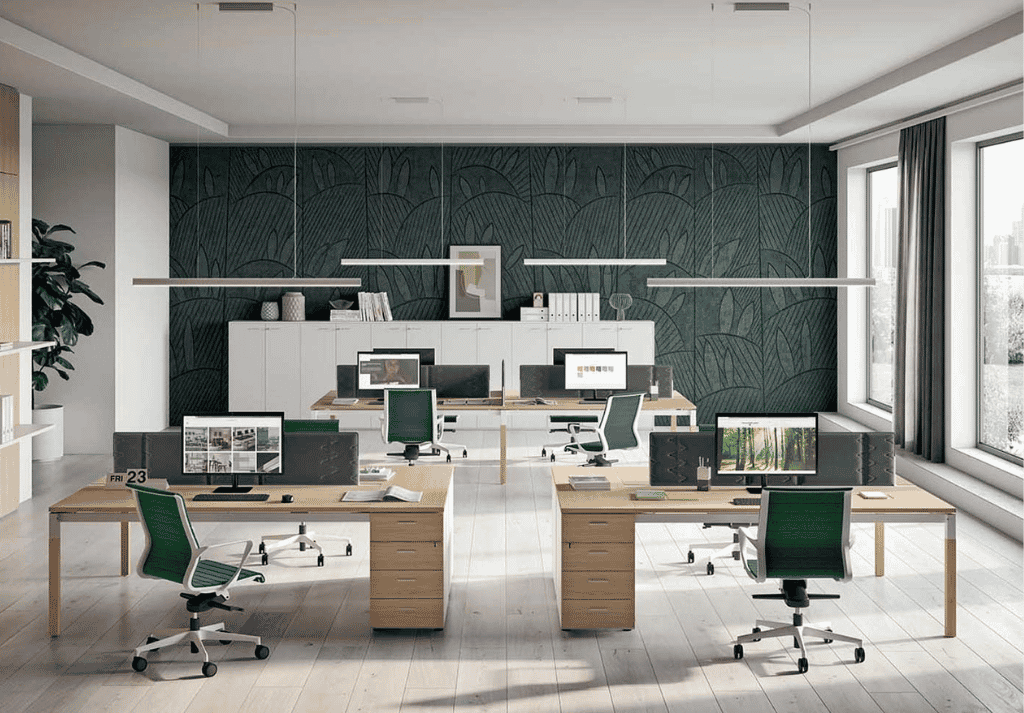
Laminate is one of the most popular commercial office desk finishes because it is:
- Durable
- Cost-effective
- Easy to clean
- Scratch-resistant
- Available in many finishes
Laminate desks work well in high-use office environments.
Wood veneer desks
Wood veneer offers a more premium appearance while remaining more affordable than solid wood.
These desks are often used in:
- Executive offices
- Meeting rooms
- Client-facing environments
Wood veneer desks are particularly effective in spaces where presentation matters, as they combine a refined, natural look with practical commercial durability. While they require a bit more care than laminate alternatives, they still offer a strong balance between style and functionality, making them a popular choice for businesses that want to elevate their office aesthetic without committing to the cost of solid wood furniture.
Metal frame desks
Strong steel frames improve desk stability and longevity.
Businesses should check:
- Frame thickness
- Weight capacity
- Joint quality
- Stability under heavy use
Metal frame desks are often chosen for busy office environments because they provide a solid structural base that can handle daily demands without becoming unstable over time. They are particularly useful in workspaces where desks are frequently moved, reconfigured, or used with heavier equipment such as multiple monitors or desktop setups.
Solid wood desks
Solid wood provides excellent durability and a high-end appearance but generally comes at a higher cost.
These are less common in larger commercial offices due to pricing and weight considerations.
When evaluating build quality, businesses should also look at warranty coverage, manufacturing standards, and overall desk stability.
How to decide between fixed desks and height adjustable options
One of the biggest decisions modern businesses faces is whether to choose traditional fixed desks or height adjustable desks. This is a major consideration in any office desk buying guide because working styles continue to evolve.
Fixed office desks
Fixed desks remain the most common option because they are:
- Affordable
- Simple to install
- Suitable for most office environments
- Available in a wide range of sizes and styles
For many businesses, fixed desks provide a practical and cost-effective solution.
Height adjustable desks
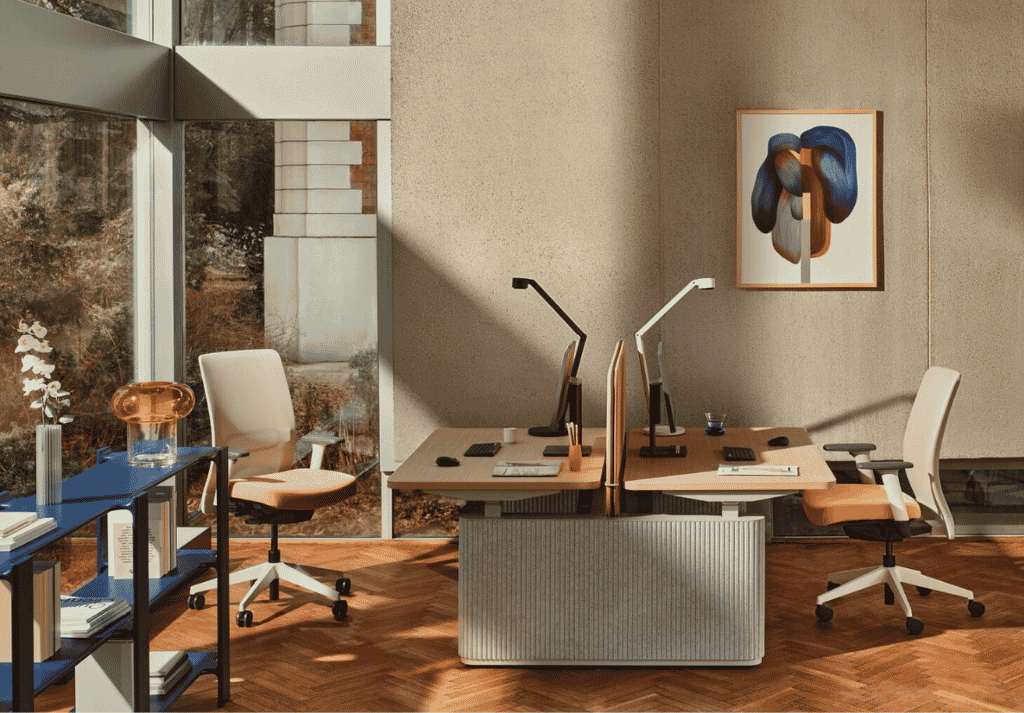
Height adjustable desks allow users to alternate between sitting and standing throughout the day.
These desks can improve employee comfort, provide greater flexibility, and support a wider range of working preferences. Many businesses also choose them to create more adaptable workstations that can better support employee wellbeing over time.
These desks are particularly popular in:
- Technology companies
- Creative industries
- Hybrid workplaces
- Employee wellbeing-focused offices
Although adjustable desks typically cost more initially, many businesses view them as a long-term investment in employee wellbeing and workplace flexibility.
When considering adjustable desks, businesses should compare:
- Electric vs manual adjustment
- Noise levels
- Weight capacity
- Height range
- Cable management compatibility
- Warranty coverage
What storage and cable management features to look for in an office desk
Storage and cable management are often overlooked during office furniture purchasing, yet they significantly affect workplace organisation and functionality.
Without proper cable management, offices can quickly become cluttered, untidy, and difficult to maintain. These workplace problems not only affect appearance but can also reduce productivity and create avoidable safety risks.
Several desk features can significantly improve day-to-day organisation and functionality within the office.
Integrated cable management
Features such as:
- Cable trays
- Cable ports
- Under-desk baskets
- Modesty panels
- Wire channels
help keep workstations tidy and reduce trip hazards.
This becomes especially important in offices using multiple monitors, phones, laptops, and charging devices.
Built-in storage
Depending on the role of the employee, businesses may require pedestal drawers, filing cabinets, lockable storage, shelving, or under-desk storage units to keep workstations organised without creating clutter.
Not every workstation needs large amounts of storage, particularly in increasingly digital workplaces.
However, businesses should assess how much physical paperwork and equipment staff still use before deciding.
Accessibility and ergonomics
Storage should remain easy to access without creating cramped legroom or awkward working positions.
Poorly positioned storage can reduce employee comfort and negatively affect workstation ergonomics.
How budget and long-term value should factor into your buying decision
Office desk pricing can vary significantly depending on size, material, features, and manufacturing quality. While budget matters, businesses should focus on finding the best office desk solution for long-term value rather than simply choosing the cheapest option.
While budget always matters, businesses should avoid focusing only on upfront costs.
Cheaper desks may result in:
- Shorter product lifespan
- Poor durability
- Lower employee comfort
- Reduced flexibility
- Increased replacement costs
Instead, businesses should evaluate long-term value.
Questions worth asking include:
- How long is the desk expected to last?
- Is the desk suitable for future office changes?
- Does it support employee wellbeing?
- Is the finish durable enough for daily use?
- What warranty is included?
- Will the desk still suit the business in five years?
Buying slightly higher-quality desks often reduces total ownership costs over time.
Businesses should also factor in installation, delivery, and future scalability when comparing office furniture suppliers.
How BT Office makes it easy to find the right office desk for your business
Choosing office desks can feel overwhelming due to the huge number of styles, sizes, and configurations available.
BT Office helps simplify the process by offering expert guidance alongside a wide range of commercial office desk solutions designed for modern workplaces. Businesses searching for the best office desk options can explore BT Office’s full range of office desks to compare styles, configurations, and workspace solutions.
Whether you need bench desk systems, executive desks, height adjustable desks, modular workstations, collaborative office layouts, or compact desks for smaller offices, choosing the right solution will help create a workspace that supports productivity, employee wellbeing, and the efficient use of available space.
Businesses furnishing compact workspaces or remote environments may also find this guide to desks for home offices and small spaces useful when planning flexible work areas.
BT Office can help businesses identify solutions that balance functionality, appearance, budget, and long-term practicality.
By understanding your workspace requirements, team structure, and future growth plans, BT Office helps create office environments that support productivity and efficient space usage.
Professional planning support also helps businesses avoid common purchasing mistakes such as overcrowding, underestimating storage needs, or selecting desk systems that cannot adapt as teams expand.
Frequently Asked Questions About Choosing the Right Office Desk
What size office desk do I need for a standard office workspace?
For most employees, a desk between 1400mm and 1600mm wide with a depth of 700mm to 800mm provides enough room for everyday office tasks, monitors, and paperwork. Larger desks may be needed for employees using multiple screens or handling project-based work.
Is it worth paying more for a height adjustable office desk?
Many businesses believe height adjustable desks are worth the investment because they provide greater ergonomic flexibility and support different working preferences. They can also help create a more modern and adaptable workplace environment.
How many desks should I buy if I am setting up a new office?
Businesses should plan not only for their current team size but also for future growth. It is often beneficial to allow some flexibility within the office layout so additional desks can be added later without major disruption.
What is the most durable desk material for a busy office environment?
Commercial-grade laminate desks with strong steel frames are often considered one of the most durable and practical options for busy offices because they resist scratches, wear, and everyday damage while remaining cost-effective.
Can I mix different desk types and styles in the same office?
Yes. Many modern offices successfully combine different desk types to support varying work styles. For example, businesses may use bench desks for collaborative teams, executive desks for management offices, and height adjustable desks in flexible workspaces.
A well-planned mixed office layout can improve functionality while creating a more dynamic and adaptable working environment.